Deck Railing Installation Terms Explained: A Plain-English Glossary
If you're pricing a deck railing job in Buffalo or anywhere in Western New York, the quotes come loaded with words like balusters, graspable handrail, and post-to-frame mounting. This deck railing installation glossary translates that jargon into plain English so you can read an estimate line by line and know what you're paying for. Use it to compare quotes, ask sharper questions, and spot the difference between solid work and a shortcut. Every definition stands on its own, so skim to the term you need.
- Baluster: the vertical pickets between posts
- Post: the upright that holds the railing up
- Top Rail: the horizontal cap you rest a hand on
- Bottom Rail: the lower horizontal member holding balusters
- Guardrail: the code word for the whole safety railing
- Graspable Handrail: a rail your hand can wrap around on stairs
- Railing Height: how tall the railing must be by code
- Baluster Spacing: the gap limit between pickets
- Post-to-Frame Mounting: bolting posts to the deck's structure
- Surface Mounting: attaching posts to the deck surface with hardware
- Blocking: extra framing lumber that stiffens post connections
- Composite Railing: railing made from wood-plastic material
- Cable Railing: horizontal steel cables instead of pickets
- Freeze-Thaw Cycling: winter's repeated freezing and melting that stresses materials
- Load Rating: how much push a railing must resist
- Building Permit: the town's written OK for the work
- Linear Foot Pricing: railing cost measured by length
- Punch List: the final fix-it list before the job closes
Railing Parts Named in This Deck Railing Installation Glossary
These are the pieces you'll see itemized on a quote. Once you know the names, a materials list stops looking like code.
Baluster
A baluster is one of the vertical pickets that fill the space between railing posts. Balusters do most of the safety work by keeping kids, pets, and adults from slipping through the railing. Quotes often price them by style and material, so a switch from plain aluminum to a decorative pattern changes cost. If a builder mentions "infill," they mean whatever fills that space, balusters, glass, or cable.
Post
A post is the upright structural member that anchors the railing to the deck. Posts carry the load when someone leans on the rail, so how they attach matters more than how they look. A quote that lists post count and mounting method tells you the builder has thought about strength, not just style. Fewer, weaker posts is a common shortcut on cheap bids.
Top Rail
A top rail is the horizontal piece that runs along the top of the railing, the part you rest a drink or a hand on. It ties the posts together and takes the brunt of weather and wear. In Western New York, a top rail sits under snow for months, so material choice here affects how the railing looks in five years. Flat wood top rails hold water; capped composite sheds it.
Bottom Rail
A bottom rail is the lower horizontal member that holds the bottom ends of the balusters. Code limits how high it can sit off the deck surface so nothing can slip underneath. Some systems skip it and run balusters straight to the decking, which changes both the look and how snow and debris collect at the railing line.
Guardrail
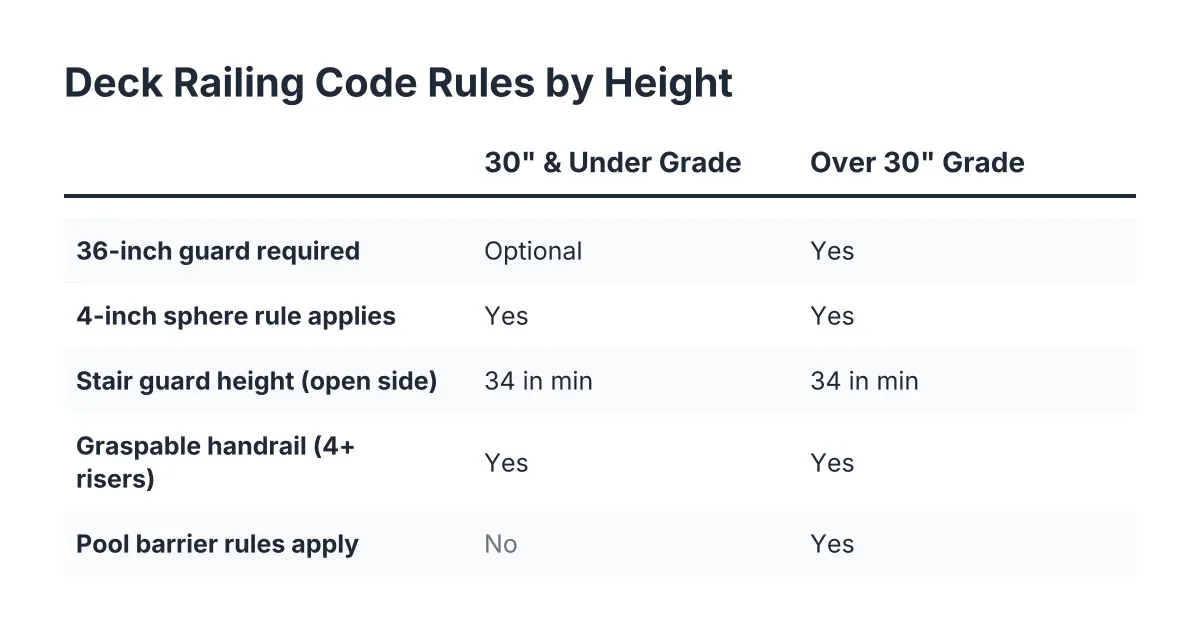
A guardrail is the building-code term for the railing that keeps people from falling off a deck edge. When your permit paperwork or inspector says "guard" or "guardrail," they mean the whole railing assembly, not a separate part. Decks above a certain height off the ground require one, so a builder who asks how high your deck sits is checking whether a guardrail is mandatory. Check your local code for the exact height trigger in your town.
Graspable Handrail
A graspable handrail is a rail shaped so your hand can wrap around it, required along most deck stairs. A wide, flat top rail looks nice but often fails this test, so stairs may need a separate round or shaped rail added. If your quote covers stairs but never mentions a graspable handrail, ask. Inspectors flag this one often, and adding it after the fact costs more than building it in.
Code and Safety Terms in the Deck Railing Installation Glossary
This part covers the words inspectors and permit offices use. These terms decide whether your railing passes or gets red-tagged.
Railing Height
Railing height is the minimum vertical distance from the deck surface to the top of the guardrail that code requires. Residential decks commonly need railings around 36 inches, with some situations calling for more, so check your local code for the number that applies to your project. A builder quoting a shorter decorative rail on an elevated deck is quoting something an inspector will reject. For code-friendly styles that hold up here, see these deck railing ideas that meet code and survive Buffalo winters.
Baluster Spacing
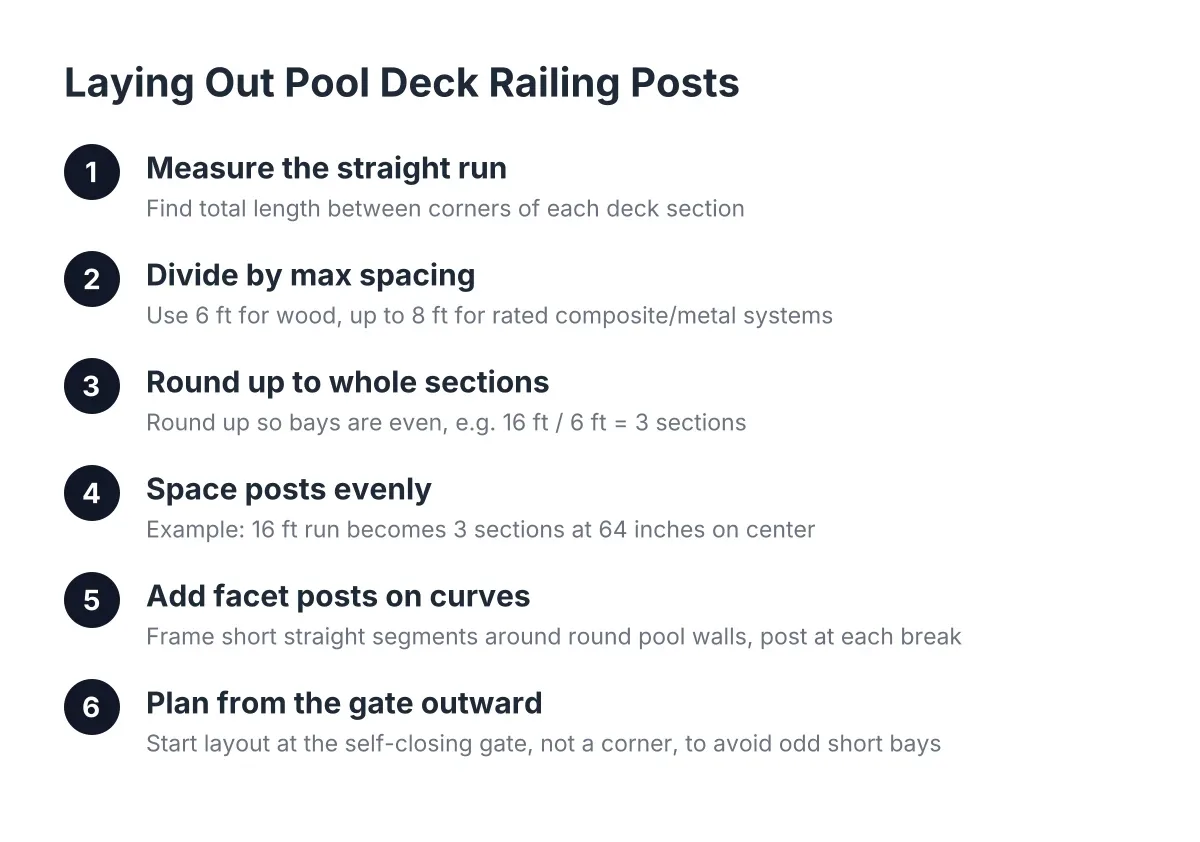
Baluster spacing is the maximum allowed gap between pickets, set by code so a small child cannot fit through. The common standard is a gap small enough that a 4-inch sphere cannot pass. This is why baluster count on a quote is not a style choice; it is math driven by your railing length. Wider spacing to save material is a red flag, not a bargain.
Load Rating
A load rating is the amount of force a railing must resist without failing, tested as a push or pull on the top rail. It is the difference between a railing that decorates an edge and one that stops a fall. Builders meet it through post mounting, blocking, and hardware, which is why those unglamorous line items exist on your quote. A railing that wobbles when you shake it is failing this test in plain sight.
Freeze-Thaw Cycling
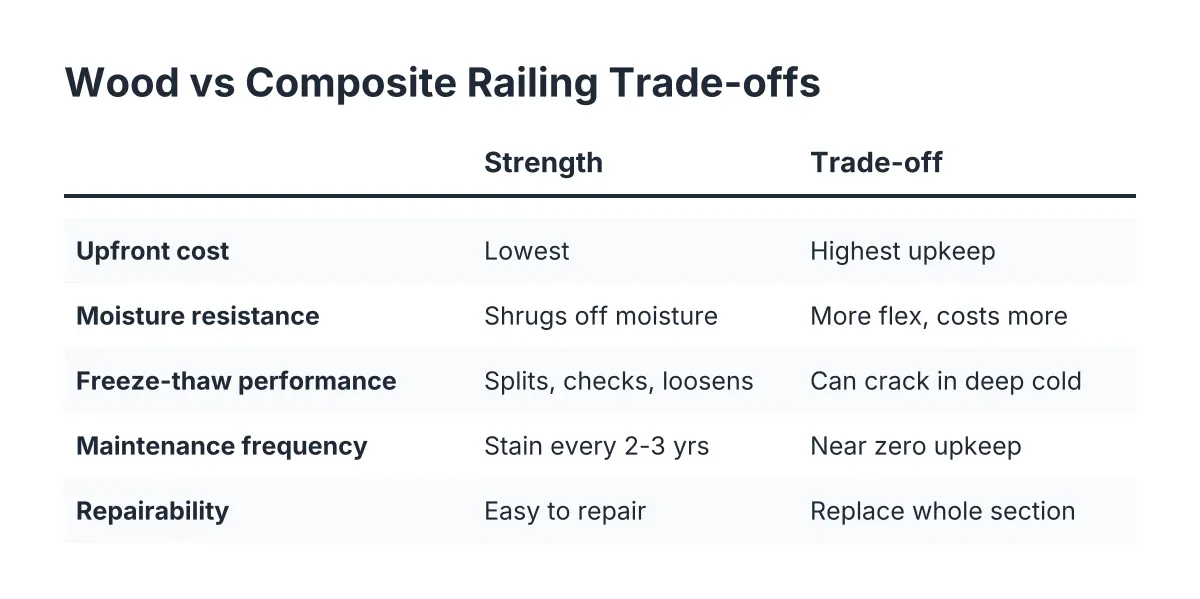
Freeze-thaw cycling means the repeated freezing and melting that water goes through in a Buffalo winter, expanding in every crack and joint as it turns to ice. It loosens fasteners, splits wood posts, and opens gaps at connections over time. This is why WNY builders push composite railing, hidden fasteners, and hardware rated for exterior use. A railing detailed for freeze-thaw lasts; one detailed for a milder climate loosens by year three.
How Railings Get Attached
Mounting is where railing jobs succeed or fail. The terms below describe how posts connect to the deck, and they explain price differences between bids.
Post-to-Frame Mounting
Post-to-frame mounting means bolting railing posts directly to the deck's structural framing, the joists and rim board under the decking. It is the strongest common method because the post ties into the deck's skeleton, not just its skin. It takes more labor, blocking, and hardware, which shows up in the price. When a builder walks you through post-to-frame mounting during a deck railing installation quote, they are describing strength you cannot see from above.
Surface Mounting
Surface mounting means attaching railing posts to the top of the decking with a metal base plate and screws or bolts. It is faster and works well with engineered systems designed for it, but a surface mount is only as strong as what sits beneath the plate. Over plain decking with no blocking below, it can loosen with seasonal movement. Ask what the base plate anchors into, not just what it sits on.
Blocking
Blocking is extra framing lumber added between joists to stiffen the spot where a railing post attaches. You will never see it once the deck boards go down, but you will feel it every time you lean on the rail. Blocking is a sign the builder is designing for load rating and freeze-thaw movement, not just assembly speed. If it appears on your quote, that is a good sign, not padding.
Materials, Styles, and Money
Composite Railing
Composite railing is railing made from a blend of wood fibers and plastic, formed into posts, rails, and balusters that never need staining. It costs more than pressure-treated wood up front and less to maintain over its life. In freeze-thaw country, composite avoids the cracking and splintering that wood railings develop after a few winters. Many WNY homeowners pair it with a composite deck for one maintenance-free package.
Cable Railing
Cable railing is a system that uses tensioned horizontal steel cables in place of vertical balusters, keeping sightlines open. It suits view decks and pool decks where you want less visual clutter. Cables need periodic re-tensioning, and the hardware and sturdy posts required push the price above standard picket systems. Code spacing rules still apply, so cables must stay tight enough that gaps do not widen under pressure.
Building Permit
A building permit is the written approval from your town or city that lets the work legally proceed and brings an inspector to check it. Railing work tied to a new deck, a rebuild, or an elevated deck usually falls under the deck permit. In Erie County, each town runs its own permit path, so the process in one suburb differs from the next. A builder who handles permits and code compliance planning is saving you a headache, and a builder who suggests skipping the permit is handing you one.
Linear Foot Pricing
Linear foot pricing means the railing cost is calculated per foot of railing length, covering materials and labor together. It is the standard way builders quote railing, and it makes comparing bids possible if you know what each foot includes. Posts, corners, stairs, and gates often carry extra charges beyond the base rate. For a breakdown of what drives the number up or down, read our guide to deck railing installation cost.
Punch List
A punch list is the short list of small fixes and touch-ups completed at the end of a job before final payment. For railing work, it might include a loose baluster, a missed screw cap, or a gate latch that needs adjusting. A builder who offers a punch list walkthrough expects to be held to the details. Ask for one in writing so nothing gets waved off as "good enough."
Using These Terms
That is the whole vocabulary a railing quote will throw at you. What this glossary gives you is the ability to read an estimate line by line, ask how the posts mount, and know why one bid costs more than another for deck railing installation. If a term on your quote is not here, ask the builder to explain it in plain words; a good one will.
If you need deck building, WNY Deck Builders can help.
Prefer to talk it through? Call (716) 317-4901 — a quick call is usually the fastest way to get a straight answer for your situation.