Deck Railing Ideas That Meet Code and Survive Buffalo Winters: 8 Rules
Most homeowners start hunting for deck railing ideas the same way, scrolling photos of cable rails and black aluminum balusters on a sunny California deck. Then February hits Western New York, the snowblower throws slush against the pickets for the fourth time that week, and the pretty option starts to matter a lot less than the one that holds up. If your deck sits more than a couple feet off the ground, or wraps an above ground pool, your railing is not decoration. It is the thing standing between your kid and a six-foot drop, and Erie County inspectors treat it that way.
This list walks through eight things worth knowing before you pick a railing style, whether you are replacing a wobbly wood rail on an older deck or planning railings for a new multi-level build on a sloped lot. The theme running through all of them: code and winter durability first, looks second. The good news is you rarely have to give up one for the other.
1. Know the height rule before you fall in love with a style
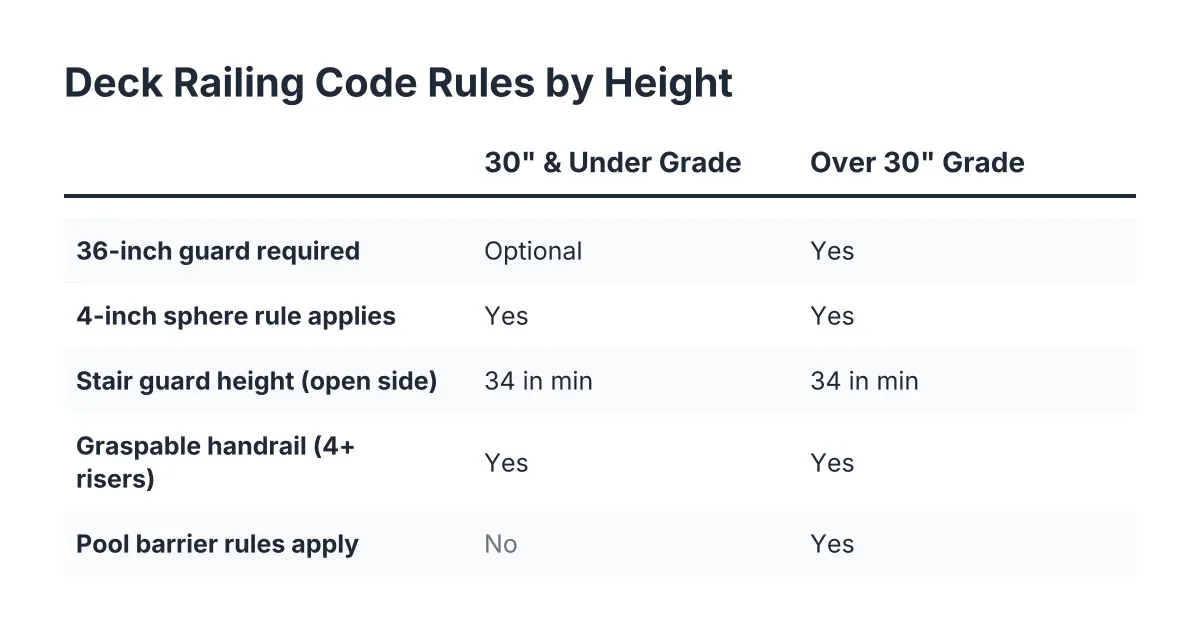
Here is the number that shapes every railing decision in New York. The state's residential building code, based on the IRC as adopted, requires a 36-inch guard height once a deck's walking surface sits more than 30 inches above grade, according to Mister Baluster. Below that 30-inch threshold, a guard is technically optional, though most people still want one.
That 30 inches gets measured to the ground at any point within 36 inches of the deck edge. On a sloped Buffalo backyard, this catches people constantly. The deck might be 24 inches off grade at the house and 40 inches off grade where the yard falls away. If any part crosses the line, that section needs a code-height guard. Plan the railing for the worst spot, not the average one.
2. The 4-inch sphere rule quietly kills a lot of Pinterest railing ideas
Any opening in a deck guard has to be small enough that a 4-inch sphere cannot pass through. That is the standard baluster spacing rule, and it exists because a 4-inch gap is roughly the size of a toddler's head. It applies between balusters, below the bottom rail, and in the triangle where stairs meet the deck.
However, this rule is exactly where trendy deck railing ideas go wrong. Horizontal designs, hog wire panels, and wide-spaced cable runs all look clean in photos. Some pass, some do not, and some pass on paper but sag out of compliance within a few seasons. Cable railing in particular needs proper tensioning and stout end posts, or the cables spread past 4 inches when a kid leans on them. If you are set on a horizontal or cable look, confirm the specific system meets the sphere rule as installed, not just as pictured.
3. Stairs have their own rules, and they are stricter
Stair railings carry two separate requirements. First, the guard along the open side of the stairs must be at least 34 inches, measured vertically from the tread nosing. Second, any stairway with four or more risers needs a graspable handrail, and graspable has a real definition. A flat 2×6 laid on top of the posts does not count; your hand has to be able to wrap around it.
For a multi-level deck on a sloped lot, this matters more than anything else on this list. A two-level design might have three separate stair runs, and every one needs a compliant guard and handrail. When you compare quotes for a multi-level deck, ask each builder how they handle stair railing ideas for the transitions. A builder who shrugs at your slope will usually shrug at the stair code too.
4. Pool decks raise the stakes on all of it
A deck around an above ground pool is almost always more than 30 inches off grade, so the 36-inch guard is not optional. On top of that, New York has pool barrier requirements meant to keep unsupervised kids out of the water. The deck railing, the stair gate, and the pool wall itself all become part of that barrier system, and the town will look at how they work together.
For example, say a homeowner in Cheektowaga installs a 52-inch above ground pool in May and wants a deck and entry stairs done before the Fourth of July. In that scenario, the stair typically needs a self-closing, self-latching gate, and the railing openings must meet the sphere rule everywhere. This is not the project to improvise. A pool deck that fails the barrier inspection cannot be signed off, no matter how solid the framing is.
5. Loose railings are usually a framing problem, not a hardware problem
If your existing rail wiggles when you push it, tightening the screws is a temporary fix at best. Guards are supposed to resist a 200-pound load at the top rail. That strength comes from how the posts connect to the deck frame, not from the pickets. Freeze-thaw cycles in WNY work fasteners loose and rot wood from the inside, so a rail that felt solid five years ago can be genuinely unsafe today.
The right fix is post-to-frame blocking and through-bolts, or manufactured post anchors rated for the load. On older decks, the joists behind the posts are sometimes too soft to hold anything, and that turns a railing repair into a deck repair. It is worth having someone open up one post connection before you budget for the whole job. In addition, notched 4×4 posts, a common shortcut on older Buffalo decks, lose about half their strength at the notch and are worth replacing rather than reinforcing.
6. Best deck railing ideas that actually survive freeze-thaw
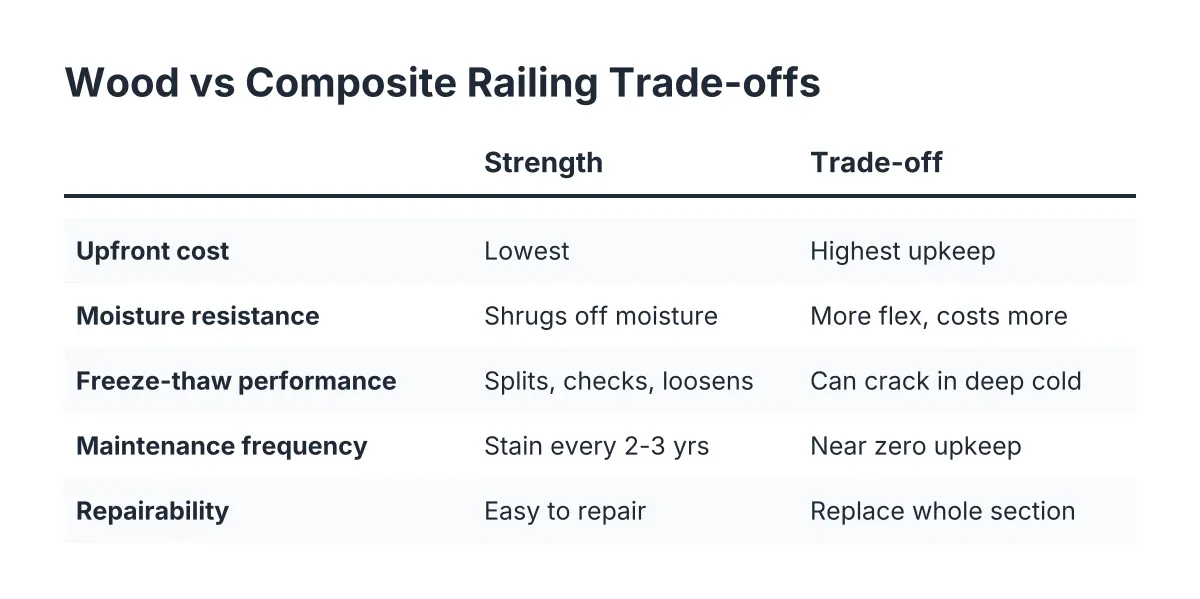
The best railing material for winter in Western New York is the one that does not absorb water. Ranked by how they handle freeze-thaw and lake-effect exposure:
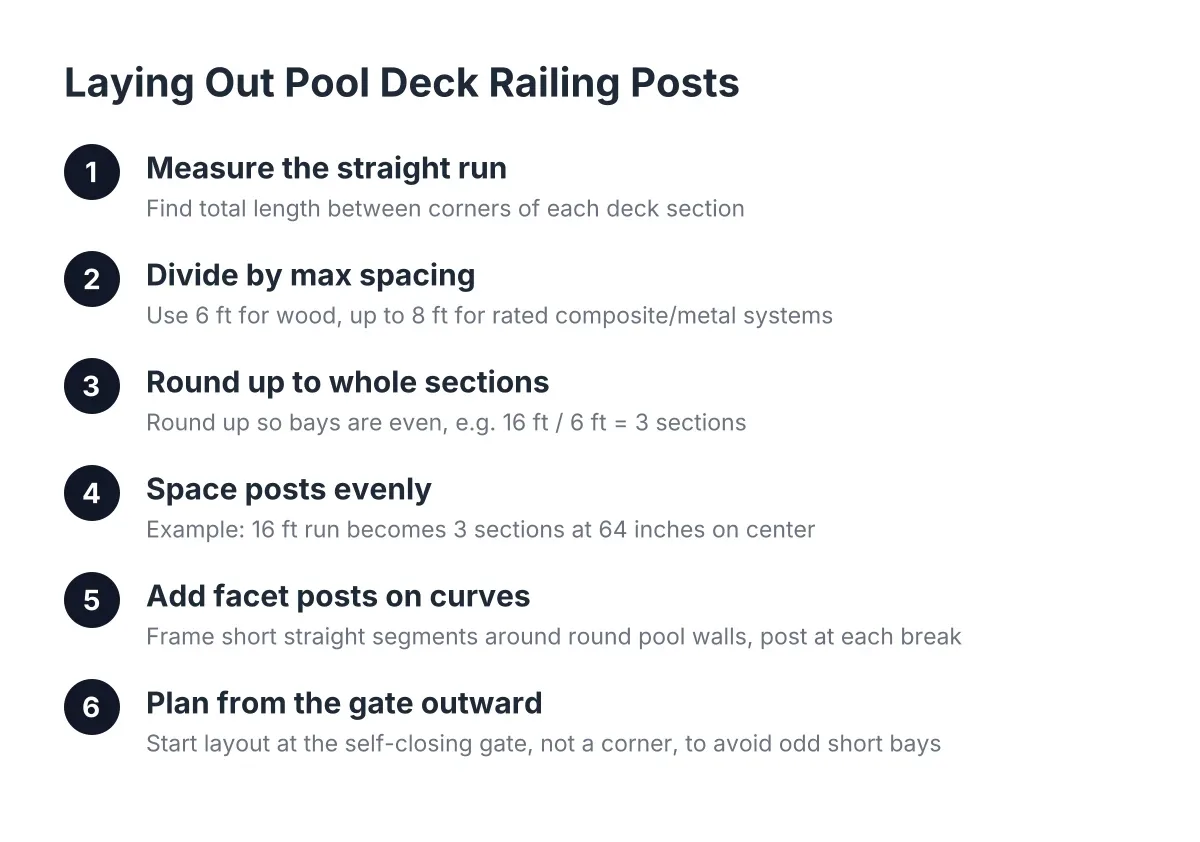
- Aluminum: Powder-coated aluminum does not rot, does not rust in any meaningful way, and shrugs off snow shoveled against it. Low upkeep, clean look, and a strong pairing with composite decking.
- Composite and PVC railing: Matches composite deck boards, never needs paint, and handles moisture well. The posts still need a solid structural core or sleeve over pressure-treated wood.
- Steel cable: Durable, but tension needs checking, and the frame holding the cables has to be built stiffer than most people expect.
- Pressure-treated wood: The budget option, and a legitimate one. It just demands honest maintenance. Expect to re-stain every couple of years and replace pickets as they check and split.
Wood railing materials still make sense on a wood deck, especially where budget is the driver. The trap is putting a wood rail on a composite deck; the deck will outlast the rail by a decade, and you will be back doing the railing project twice.
7. Inexpensive does not have to mean flimsy
There are honest ways to keep railing costs down without cutting into safety. Simple designs cost less than ornate ones because labor drives the price more than material does. A straight run of pressure-treated posts with black aluminum balusters gives you a near-composite look at a wood-rail budget. Skipping post caps, lighting, and decorative top rails trims cost without touching the structure.
Therefore, if you are searching for budget-friendly railing options, cut the decoration, never the connections. Cheap post anchors and undersized bolts are where budget railings become dangerous railings. Spend on the parts you cannot see; save on the parts you can. Costs vary with linear footage, material, stair count, and how much structural work the frame needs, so get the frame assessed before locking in a number.
8. Permits and inspections are part of the railing job, not an afterthought
In most Erie County towns, a new deck or a structural railing replacement needs a permit, and the guard height, baluster spacing, and post connections are exactly what the inspector checks. Swapping pickets one-for-one on an existing compliant rail usually does not trigger a permit; rebuilding the guard system or changing the deck height usually does. Every town handles it a little differently, so a call to your building department settles it in five minutes.
Unpermitted work carries real risk beyond fines. It can stall a home sale when the buyer's inspector flags a 32-inch rail on a 5-foot-high deck, and homeowner's insurance can push back on claims tied to unpermitted structures. As of 2026, towns across WNY have gotten stricter about deck permits, not looser. A deck builder who handles the permit path and code compliance planning as part of railing installation is saving you a headache two steps down the road, not padding the invoice.
How to choose: match the railing to the deck you actually have
Pull the eight points together and the decision gets simpler than the endless idea galleries suggest:
- Measure your deck height at the lowest point of grade. Over 30 inches means a 36-inch guard, period.
- Count your stair runs. Each one needs a 34-inch guard and a graspable handrail if it has four or more risers.
- Pick a material that matches your deck's lifespan. Composite deck, composite or aluminum rail. Wood deck, wood or aluminum rail.
- Check the frame before you buy anything. Soft joists or notched posts change the scope.
- Confirm the permit question with your town before work starts.
One honest caveat: if your deck is elevated, multi-level, or wraps a pool, the railing design and the structural framing are tangled together, and this is where a specialist earns the money. Guard loads, stair geometry on a slope, and pool barrier rules interact in ways a checklist cannot fully cover, so have a deck builder or your town's code office review the plan before you commit.
The railing is the part of the deck people touch every day and the part inspectors scrutinize hardest. Choose it for the February version of your backyard, not the July version, and the July version takes care of itself.
If you need deck building, WNY Deck Builders can help.
Related guide: deck railing installation — Complete Guide
Prefer to talk it through? Call (716) 317-4901 — a quick call is usually the fastest way to get a straight answer for your situation.