
Deck Lighting and Features — Complete Guide
Planning built-in features for a new or existing deck is one of the most enjoyable parts of a backyard project, and it deserves more than a Pinterest board. This guide covers deck lighting ideas, built-in benches, planters, privacy screens, and shade structures, all filtered through what actually holds up in a Buffalo winter. Lake-effect snow, freeze-thaw cycles, and short daylight hours change which features make sense and how you should install them. Below, you'll find a clear overview of each feature category, plus links to deeper guides on cost and planning. By the end, you'll know which add-ons fit your deck, your budget, and Western New York weather.
What You'll Find in This Guide
Deck Lighting Ideas That Survive a Buffalo Winter
Most deck lighting advice assumes mild climates. In Western New York, fixtures must handle lake-effect snow, road salt, and temperature swings that crack cheap plastic. Durability filters your choices first; style comes second.
Start with three main fixture families: post cap lights (highest visual payoff), recessed riser lights (stair safety), and under-rail strip lighting (soft ambiance). Most Buffalo homeowners combine two: riser lights for safety plus either post caps or strips for ambiance.
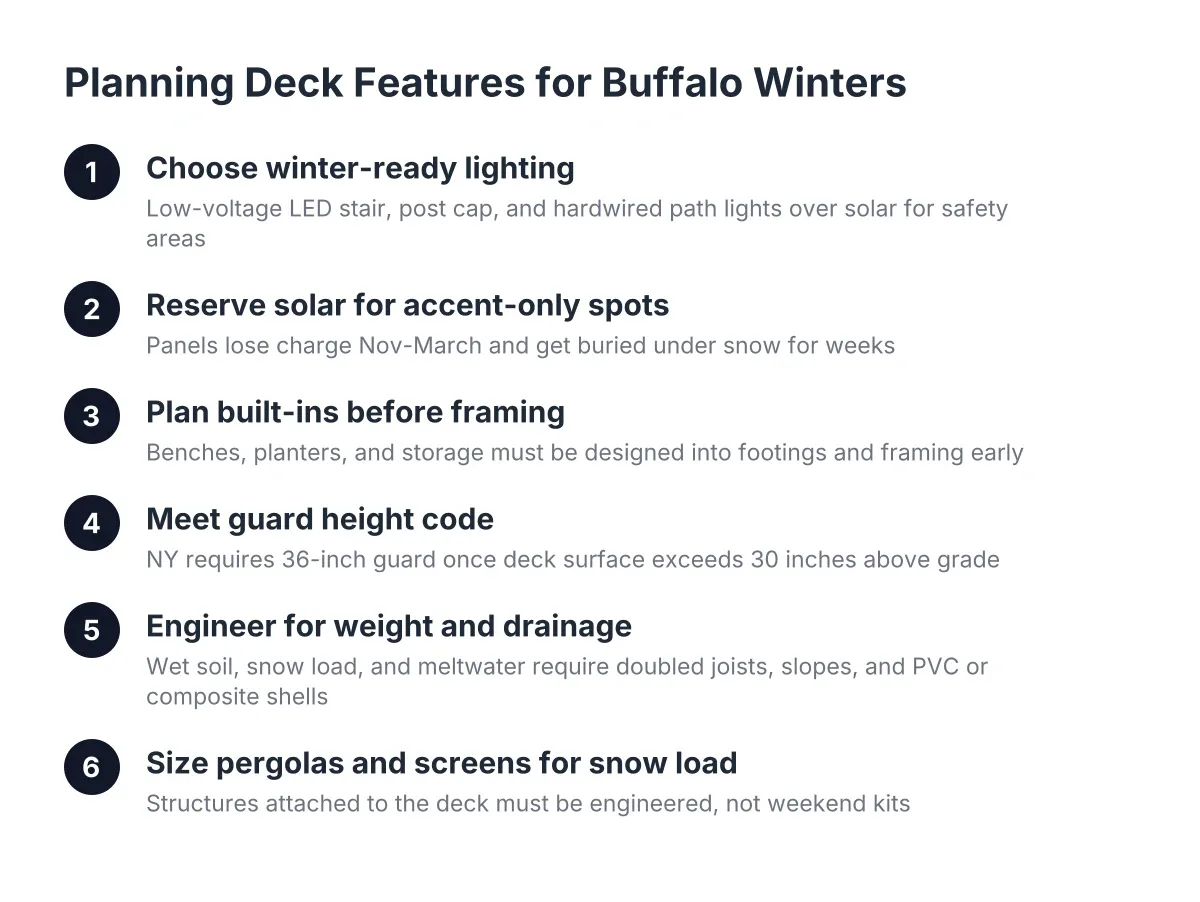
Decide how to power everything. Low-voltage systems (12-volt transformer) offer safer wiring and easier expansion. Solar deck lights struggle here—Buffalo winters bring short, overcast days and weeks of snow cover on panels. Solar works best as accent lighting you can skip in January, not primary stair or path lighting. For safety-critical light, wire it.
Timing matters. The cheapest moment is during construction, before decking goes down. Your builder can run wire channels through framing, hide the transformer, and position junction points precisely. Retrofitting existing decks is doable but costs more and limits wire routing. Our guide on what deck lighting and features cost breaks down fixture pricing, wiring, and installation labor.
One Buffalo detail: post cap lights sit on guardrails. New York's residential code requires 36-inch guard height once your deck rises more than 30 inches above grade, per Mister Baluster. Your lighting and railing plans are connected. Choose caps rated for your post size and railing system, not catalog aesthetics alone.
Built-In Benches and Planters: Comfort That Doubles as Structure
Built-in seating changes how a deck feels. Instead of dragging patio chairs around, you get permanent, sturdy seating that defines the edges of your space and never blows over in a November windstorm. However, built-ins come with structural and code considerations that most inspiration articles skip entirely.
What Makes a Built-In Bench Work in WNY
A good built-in bench ties directly into the deck framing below, not just the decking surface. That connection is what lets it shrug off snow load and decades of use. If you're searching for built in deck bench plans, look for designs that anchor to joists or blocking, use ground-contact-rated lumber or composite sleeves, and slope the seat slightly so meltwater drains off instead of pooling and freezing.
Here's the code point that surprises homeowners. A bench along the edge of an elevated deck does not replace a guardrail. In fact, it can make the guard requirement stricter, because someone standing on the bench is now higher off the ground. Consequently, benches on elevated decks usually sit inside the railing line or integrate with a taller guard design. A builder who handles permits and code compliance will catch this at the design stage, not at inspection.
Planters That Don't Rot Your Deck
Built-in planters look great and soften all that horizontal decking. The risk is moisture. A planter holds wet soil against wood or composite for eight months a year, and in winter that soil freezes and expands. Therefore, every built-in planter needs a rigid liner, drainage that directs water away from the framing, and an air gap between the planter box and the deck structure. Skip any of those and you're building a slow rot machine.
Composite and PVC trim make excellent planter cladding here because they don't absorb water. Additionally, matching your planters to your decking brand gives the whole deck a cohesive, finished look. Pricing for benches and planters varies widely with size and material, and the deck features cost guide covers realistic ranges for both.
Pergolas, Privacy Screens, and Shade Structures: Outdoor Lighting and Ideas for Snow Load
Shade structures and privacy screens turn a deck from a platform into an outdoor room. That said, these are the features where Buffalo weather demands the most respect. A pergola that works fine in North Carolina can fail here, because our designs must carry real snow load.
Attaching a Pergola to Your Deck
A pergola attached to a deck transfers its weight, plus wind and snow forces, down through the deck posts and into the footings. This means the pergola decision affects your foundation. In Western New York, deck footings need to reach 42 inches deep to get below frost, and posts carrying a pergola often need larger footings than posts carrying decking alone. For that reason, plan the pergola before the footings pour, even if you'll build the pergola itself a year later. Your builder can oversize the footings and posts now for a fraction of what a retrofit costs.
Material choice matters too. Cedar and pressure-treated pine remain popular, but aluminum and fiberglass pergola kits have improved dramatically. They hold paint-free finishes through freeze-thaw cycles and handle snow well when properly engineered. Whichever route you choose, confirm the snow load rating. Erie County towns review attached structures during permitting, so an engineered kit or stamped design smooths the approval process.
Privacy Screen Options for Tight Lots
Buffalo neighborhoods often put houses close together, which makes privacy screens one of the most requested deck features we build. Your main options include horizontal slat walls in composite or cedar, lattice panels, louvered systems that adjust like blinds, and living screens built from planters and climbing plants. Beyond looks, think about wind. A solid privacy wall acts like a sail, so it needs posts and connections engineered for the load. Slatted and louvered designs let wind pass through, which reduces stress on the structure.
Height matters for code and for neighbor relations. Many towns cap fence and screen heights, and a screen mounted on an elevated deck sits well above grade already. Consequently, check your town's rules before you fall in love with an eight-foot design. A deck specialist who works across Erie County towns can tell you quickly what your municipality allows.
Sequencing Your Features: During the Build or After?
The single biggest cost lever with deck features is timing. Every feature costs less to install during construction than after. Wiring hides inside open framing, bench supports bolt to exposed joists, and pergola posts share footings with deck posts. Once decking goes down, all becomes harder.
You don't need to build everything at once. The smartest approach for most homeowners is a phased plan. During the build, invest in things that live inside the structure: wire runs and conduit for lighting, oversized footings under future pergola posts, and blocking where benches or screens will anchor. Afterward, add visible features as budget allows. This keeps your initial construction cost manageable while preserving every option.
A common phasing plan: Year one covers the deck itself with stair riser lights wired in, plus rough-in wiring capped for future fixtures. Year two adds post cap lights and a privacy screen on the neighbor-facing side. Year three brings the pergola, landing on footings sized for it from day one. Each phase feels like an upgrade rather than a construction project.
Decks hold value well at sale time. According to NerdWallet, citing the National Association of Realtors' 2023 Remodeling Impact Report, homeowners recover 89% of the cost of a new wood deck when they sell. Well-executed lighting and built-ins strengthen that impression by making the deck feel finished and usable, not bare.
Keep your feature list connected to your lighting plan. Benches need light beside them, pergolas create shadows that change where fixtures should go, and privacy screens can host mounted sconces. The best deck lighting ideas emerge when you design lighting and features together instead of bolting lights on at the end. Sketch the whole vision first, then phase the construction, and every dollar spent builds toward the same finished picture.
Ready to Get Started?
If you're planning a new deck or upgrading an existing one anywhere in Buffalo or Western New York, we'd love to help you design features that look great in July and still work in February. Reach out for a straightforward conversation about your space, your budget, and a phased plan that fits both. No pressure, just honest answers from a local deck specialist.