Deck Repair and Restoration Terms Explained: A Plain-English Glossary
If you are getting deck repair quotes in Buffalo and the paperwork reads like a foreign language, this page is for you. This deck repair and restoration glossary explains the terms deck builders use, in plain English, so you can read a quote line by line, ask better questions, and spot problems on your own deck before they get expensive. Each entry takes under thirty seconds to read. No sales pitch, just the words and what they mean.
- Wood Rot: fungus eating wet wood
- Joist: the boards under your deck boards
- Ledger Board: where the deck attaches to the house
- Flashing: the metal that keeps water out
- Footings: the concrete your deck stands on
- Frost Heave: freeze-thaw pushing footings up
- Post: the vertical support under the frame
- Beam: the big board the joists sit on
- Fasteners: the screws, nails, and bolts holding it together
- Deck Resurfacing: new boards on an old frame
- Sistering: doubling up a weak joist
- Sanding and Refinishing: stripping and recoating the surface
- Sealing and Staining: protective coatings for wood decks
- Composite Decking: low-upkeep boards made of wood and plastic
- Snow Load: the weight of snow your deck must carry
- Deck Inspection: a structural checkup before work starts
- Permit: the town's sign-off on structural work
- Scope of Work: the written list of what you are paying for
Structure and Damage Terms
These are the words a deck builder uses when describing what is under your feet and what has gone wrong with it.
Wood Rot
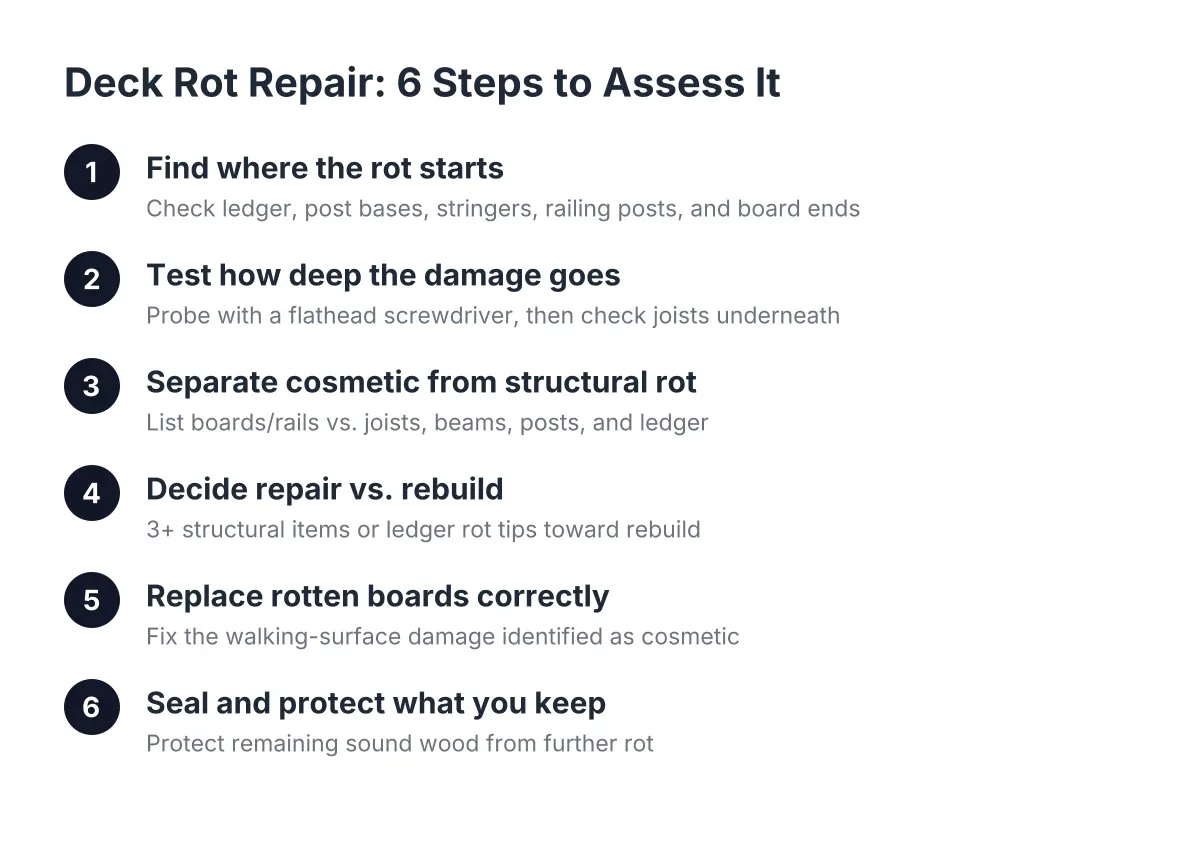
Wood rot is decay caused by fungus that grows in wood that stays wet. Rot is the number one reason Buffalo decks need repair, because our long snowy winters keep lumber damp for months. Soft, spongy, or crumbling wood means rot has set in, and the fix depends on how far it has spread. A builder who probes your posts and joists with a screwdriver is checking for it. If you want to gauge it yourself first, here is how to assess wood rot and decide repair vs. rebuild.
Joist
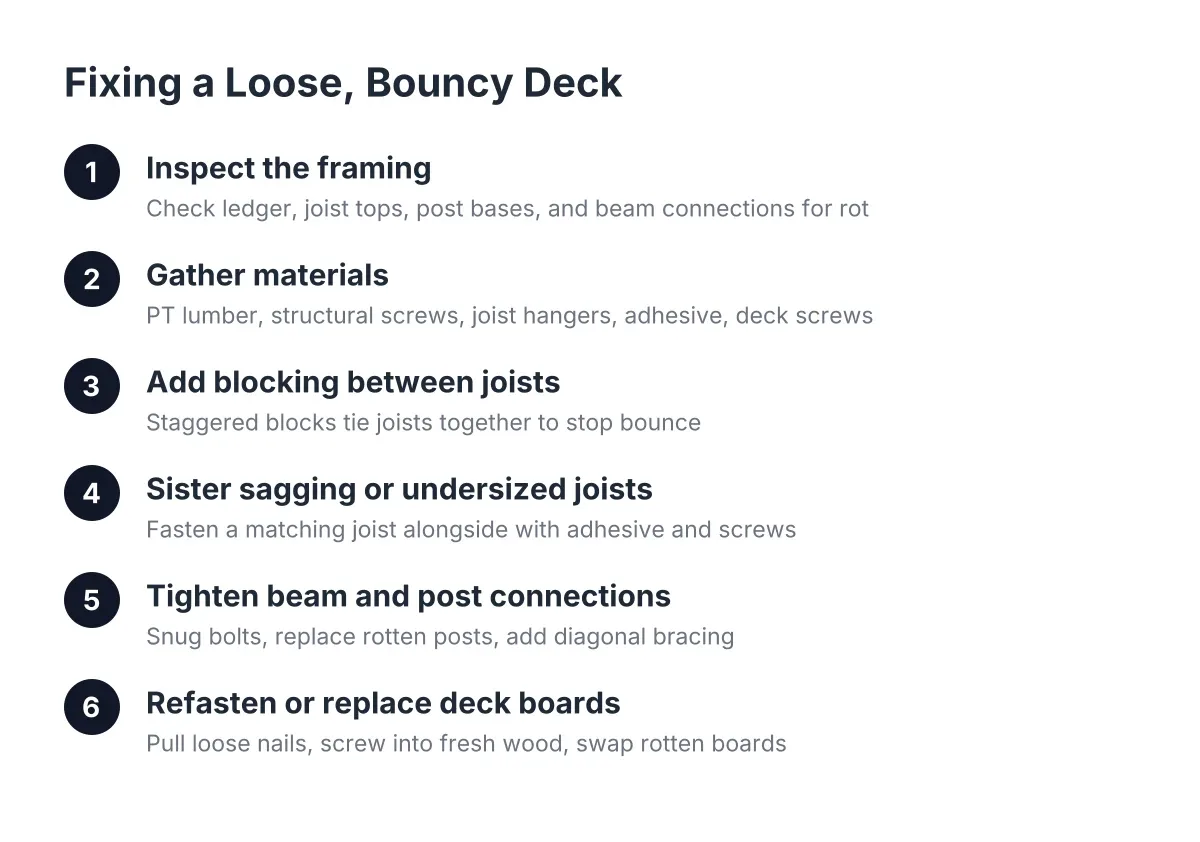
A joist is one of the parallel boards under your deck boards that carries the weight of everything on top. Joists run under the decking like ribs, usually spaced 12 to 16 inches apart. When a quote mentions replacing joists, the builder found damage below the surface, which raises the scope beyond a cosmetic fix. Bouncy or sagging spots often trace back to failing joists; this guide on fixing a loose, bouncy deck walks through the usual causes.
Ledger Board
A ledger board is the horizontal board that attaches a deck to the house and carries a large share of the deck's weight. It is the most common failure point in deck collapses, so builders take it seriously. If the ledger was nailed instead of bolted, or water got behind it, a repair quote will call it out. A ledger fix costs more than a board swap, but it is not the place to save money.
Flashing
Flashing is the thin metal or plastic barrier that directs water away from the joint between the deck and the house. Without good flashing, melting snow runs behind the ledger board and rots both the deck and your home's framing. Missing or rusted flashing is a red flag on older Western New York decks. If a builder mentions replacing flashing, they are protecting the house, not padding the bill.
Footings
Footings are the concrete bases in the ground that support a deck's posts. In the Buffalo area, footings need to reach below the frost line, which local practice puts at 42 inches, so freezing soil cannot shift them. Shallow footings are a common problem on older decks and can make an otherwise solid deck lean or wobble. Fixing footings is structural work, so expect it to change the scope and cost of a repair.
Frost Heave
Frost heave means the ground lifting as water in the soil freezes and expands, pushing footings and posts upward. Every winter in Western New York, freeze-thaw cycles work on any footing that sits too shallow. Signs include a deck that racks out of level, gaps opening at the ledger, or stairs that no longer meet the ground. A builder who talks about frost heave is telling you the problem starts below grade, not in the boards you can see.
Post
A post is the vertical piece of lumber that carries the deck's weight from the beam down to the footing. Posts rot from the bottom up, right where they meet concrete and sitting water. A repair quote that includes new posts, or metal post bases to lift the wood off the concrete, is addressing the load path of the whole deck. That matters more for safety than any surface fix.
Beam
A beam is the heavy horizontal board that sits on the posts and supports the joists. Think of it as the backbone of the frame: posts hold the beam, the beam holds the joists, and the joists hold the deck boards. A cracked or sagging beam is a serious repair, because everything above it depends on it. Builders sometimes call it a girder; same thing.
Fasteners
Fasteners are the screws, nails, bolts, and metal connectors that hold a deck together. Old decks often have rusted nails or the wrong hardware, which loosens the frame long before the wood fails. When a quote lists new structural bolts, joist hangers, or hidden fasteners, the builder is tightening the skeleton, not just the skin. Corrosion-resistant hardware matters here because road salt and wet snow eat cheap fasteners fast.
Repair and Restoration Work
These terms describe the actual jobs on a deck repair and restoration glossary, from light refresh work to structural fixes. Knowing them helps you compare two bids that use different words for the same task.
Deck Resurfacing
Deck resurfacing means replacing the deck boards and often the railing while keeping the existing frame. It is the middle path between patching a few boards and tearing the whole deck down. Resurfacing only makes sense if the joists, beam, posts, and footings pass inspection. If your frame is sound, resurfacing can give you what looks like a new deck for well under the cost of a full rebuild.
Sistering and Restoration
Sistering means fastening a new board alongside a weakened joist so the two share the load. It is a standard, accepted repair for joists that are cracked or partly rotted but still anchored well at both ends. Sistering costs less than full joist replacement because the builder does not have to remove the old board. If a quote lists sistered joists, ask how many and why, so you understand how much of the frame is compromised.
Sanding and Refinishing
Sanding and refinishing means stripping the worn surface off wood deck boards and applying a fresh protective finish. It removes gray, weathered fibers, old peeling stain, and raised splinters. This is restoration work, not repair, so it assumes the boards underneath are still solid. On a Buffalo deck, refinishing typically needs repeating every few years because freeze-thaw and sun break coatings down.
Sealing and Staining
Sealing and staining are the protective coatings applied to wood decks: sealer blocks water, and stain adds color plus UV protection. Skipping this upkeep is how most wood decks in WNY end up needing repair, because unsealed wood soaks up snowmelt and then splits when it freezes. A builder who includes sealing in a restoration quote is buying you time before the next repair. Composite decking skips this chore entirely, which is a big reason homeowners here switch.
Composite Decking
Composite decking is board material made from a blend of wood fibers and plastic that resists rot, splinters, and fading. It costs more up front than pressure-treated wood but does not need sanding, sealing, or staining. For Western New York weather, composite and PVC boards handle freeze-thaw cycles better than bare wood. If your frame is healthy, a builder may suggest resurfacing an old wood deck with composite boards as a long-term fix.
Paperwork, Cost, and Process
The terms below show up in estimates, permits, and inspections rather than in the lumber pile.
Snow Load
Snow load is the weight of accumulated snow that a deck's frame must be built to carry. Buffalo's lake-effect snow makes this a real design factor, not a technicality. Undersized joists or wide post spacing that would be fine in a mild climate can sag or fail under a WNY winter. When a repair estimate mentions beefing up framing for snow load, the builder is sizing the fix for the weather your deck actually faces.
Deck Inspection
A deck inspection is a structural checkup where a builder examines the frame, footings, ledger, fasteners, and boards before recommending work. A good inspection separates cosmetic wear from structural failure, which is the whole repair-or-replace question. Insist on one before signing any repair quote of size. If you are weighing that decision now, this guide on whether to repair or replace before restoring a deck lays out the trade-offs.
Permit
A permit is written approval from your town or city to do structural work, issued before the job starts. In Erie County, cosmetic work like refinishing usually does not need one, but structural changes such as new footings, a new ledger, or a resurface with railing changes often do. Ask any builder who will pull the permit and confirm it in writing. A builder who shrugs off permits on structural work is leaving the risk with you.
Scope of Work
A scope of work is the written list in your contract or quote describing exactly what the builder will do, with what materials. It is the single best tool you have for comparing bids, because two quotes with different prices often cover different scopes. A vague scope hides surprises; a detailed one lists boards, hardware, framing fixes, and cleanup. Cost differences usually live here, and this deck repair and restoration cost guide explains the factors that move a price up or down.
Using These Terms
You now have the vocabulary to read a repair quote line by line and know whether you are paying for a surface refresh or a structural fix. That is what this deck repair and restoration glossary is for: sharper questions, fewer surprises, and the confidence to push back when a scope of work is vague. Keep it handy the next time a builder walks your deck with a screwdriver in hand.
If you need deck building, WNY Deck Builders can help.
Related guide: deck repair and restoration — Complete Guide
Prefer to talk it through? Call (716) 317-4901 — a quick call is usually the fastest way to get a straight answer for your situation.