Fixing a Loose, Bouncy Deck: Step-by-Step Repair Guide for Buffalo Homes
If your deck flexes when you walk across it or a board shifts under your foot, you want a straight answer before anyone talks you into a full teardown. The good news: fixing a loose, bouncy deck is often a framing and fastener job, not a rebuild. This guide walks through how to fix a bouncy deck step by step, the materials you need, and the honest signs that tell you when a repair will hold and when it will not. It is written for Western New York conditions, where freeze-thaw cycles and lake-effect snow loads work on a deck harder than almost anywhere else.
One point up front. Bounce and loose boards are symptoms. Sometimes the cause is undersized joists or missing blocking, which you can fix. Sometimes the cause is rot in the framing or footings that heaved out of the ground, which you cannot fix with screws. The steps below start with an inspection for exactly that reason.
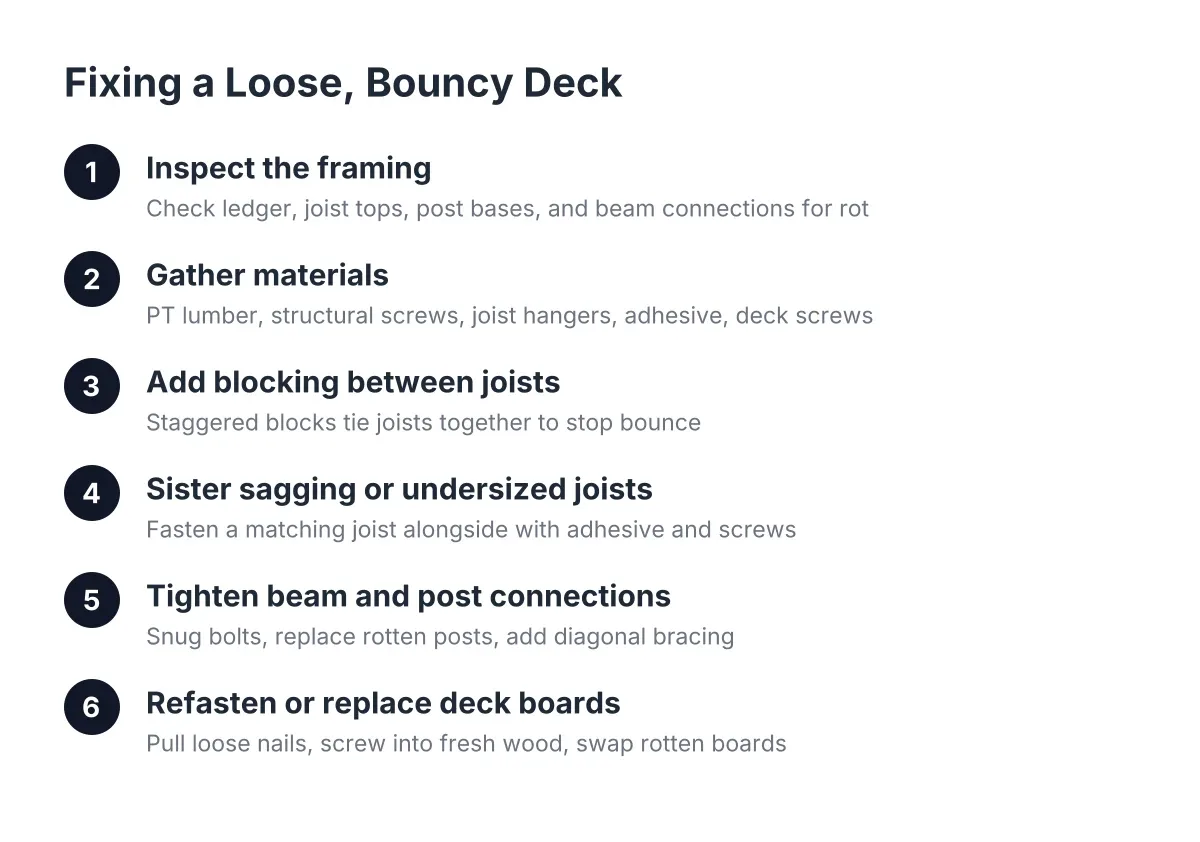
Step 1: Inspect the Framing Before You Buy Anything
Do not start by pulling deck boards. Start underneath. Grab a flashlight and a screwdriver, and crawl under the deck if you can.
Push the screwdriver tip into the joists, the beam, the ledger board where the deck attaches to the house, and the posts near the ground. Sound wood resists. If the tip sinks in a half inch with light pressure, that wood is rotten, and no amount of new screws will make it safe.
Check these specific points:
- The ledger board. This is the number one failure point on older decks. Look for rot, rusted fasteners, and missing flashing. Water trapped here is what drops decks off houses.
- Joist tops. Rot often starts on the top edge of the joist where deck boards trap water. You may need to pry up one board to see it.
- Post bases and footings. In Buffalo, footings need to sit 42 inches deep to get below frost. Shallow footings heave every winter, and a heaved post is often why a deck went bouncy in the first place.
- Beam connections. Beams should sit on top of posts or in proper hardware, not hang off bolts alone.
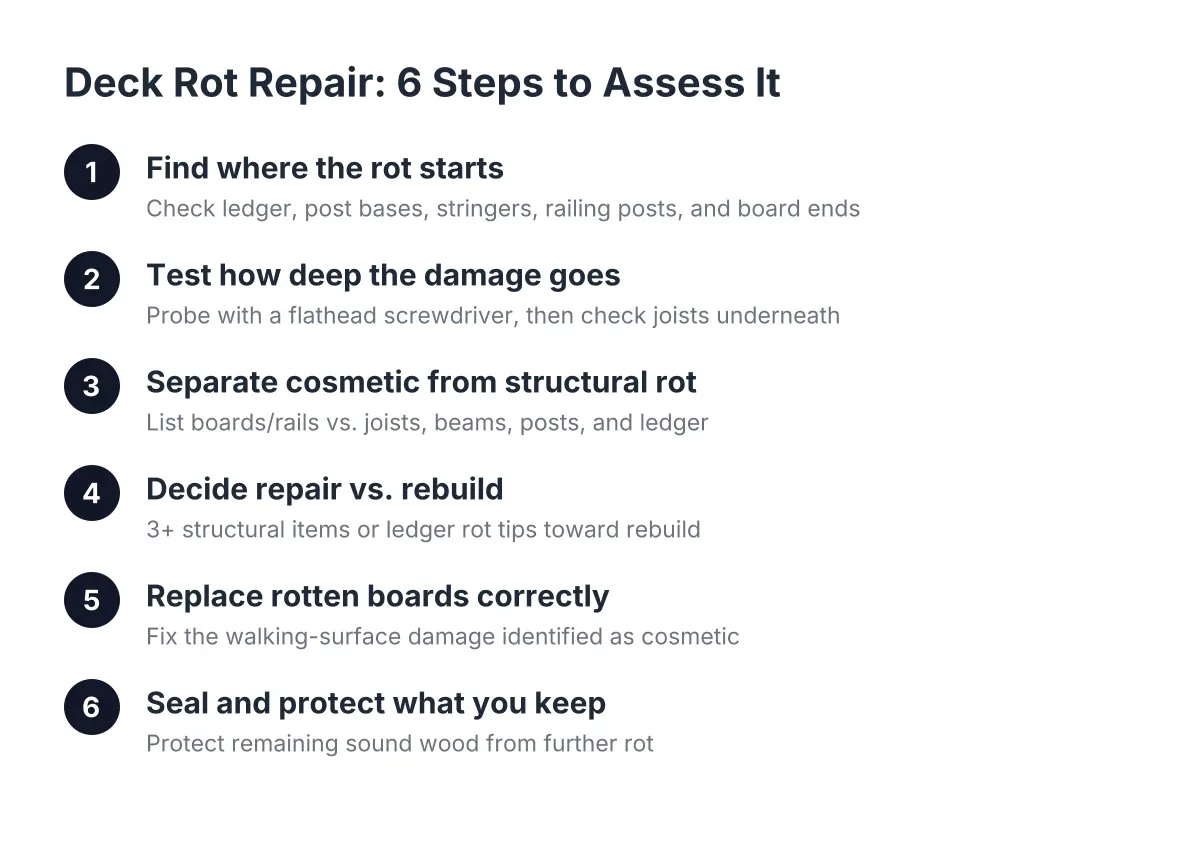
If the framing is solid and the problem is loose fasteners, long joist spans, or missing blocking, keep going. If you find soft framing, a rotted ledger, or heaved footings, stop and get a professional assessment. A deck repair and restoration specialist can tell you in one visit whether the structure is worth saving, and an honest one will say so when a repair beats a rebuild.
Step 2: Gather the Materials for Fixing a Loose, Bouncy Deck
Most of this job takes common lumber and hardware. For a typical 12 by 16 deck, plan on the following:
- Pressure-treated 2x lumber matching your joist size, for blocking and sister joists
- Exterior structural screws, 3 inch or longer (not drywall screws, they snap)
- Joist hangers and hurricane ties rated for exterior use, with the matching hanger nails
- Construction adhesive rated for treated lumber
- Deck screws for refastening boards, 2.5 to 3 inch
- A drill, circular saw, level, and a hydraulic bottle jack if a beam needs temporary support
Use hot-dipped galvanized or stainless hardware. Treated lumber corrodes standard fasteners, and in WNY the salt and moisture speed that up. A rusted hanger nail is how a repair fails two winters later, which is the exact bad experience you are trying to avoid repeating.
Step 3: Add Blocking Between the Joists
Blocking is the single biggest fix for bounce. It ties the joists together so a footstep loads several joists instead of one flexing on its own.
Cut blocks from the same size lumber as your joists. Measure each bay separately; joist spacing drifts, especially on older decks. Snap a chalk line across the middle of the span, then install the blocks in a staggered row, alternating each block slightly to one side of the line so you can nail or screw through the joist face into the block ends.
For spans over 12 feet, add two rows of blocking at the third points instead of one row at the middle. Drive at least three structural screws into each end of each block. Loose blocking rattles and does nothing; tight blocking stiffens the whole floor.
Sister Joists for Sagging or Undersized Framing
If a joist sags or the framing was undersized from the start, sister it. Cut a matching joist to the same length, run a bead of construction adhesive along the old joist, clamp the new one beside it, and fasten every 16 inches with structural screws in a zigzag pattern. Set the new joist in hangers or on the beam just like the original. Sistering plus blocking will take the trampoline feel out of most decks that were framed with 2×6 joists on long spans.
Step 4: Tighten the Beam and Post Connections
A deck that sways side to side, rather than flexing up and down, usually has loose post connections. Check every bolt where posts meet the beam and snug them with a wrench. Replace any carriage bolts that spin in rotten wood; if the wood around the bolt is punky, that post section needs replacement, not tightening.
Next, add diagonal bracing if the deck stands more than a few feet off the ground. A 2×6 brace running from post to beam at 45 degrees on each post kills most sway. This matters more here than in milder climates. Snow load pushes down, but a deck also needs to resist the racking that comes from freeze-thaw movement in the soil under it.
Step 5: Refasten or Replace the Loose Deck Boards
Now work topside. Walk the deck and mark every loose board with chalk. Old nails back out of joists over time; that popping and clicking underfoot is nails, not the boards themselves failing.
Pull the loose nails rather than driving them back in, then drive deck screws about an inch away from the old holes so you hit fresh wood. Two screws per board per joist. If a board is cupped, screw the edges first to flatten it.
Replace any board that is soft, cracked through, or rotted at the ends. Rotten deck boards do not repair well; small surface gouges in otherwise sound wood can take an exterior wood filler such as Bondo wood filler before refinishing, but a spongy board goes in the trash. Filler is for cosmetics, never for structure.
Step 6: Seal and Finish So the Fix Lasts Through Winter
A tightened deck stays tight only if water stays out of the wood. Once repairs are done, clean the deck and let it dry for two or three rain-free days. Then apply a penetrating finish. The best deck sealer and stain for a Buffalo deck is a semi-transparent, oil or hybrid penetrating stain; it soaks in and moves with the wood through freeze-thaw cycles instead of peeling.
Skip deck restoration paint and thick film-forming coatings on a structural repair. Those products bridge gaps and hide the early signs of rot, so the next problem stays invisible until it is a big one. If the surface is too far gone for stain to look decent, that is usually the signal to price new decking, not thicker paint.
When Fixing a Loose, Bouncy Deck Is Not Enough
Fixing a loose, bouncy deck makes sense when the frame is sound and the problems are fasteners, spans, and bracing. It stops making sense when the structure itself is failing. Repair no longer pays when you find:
- Rot in the ledger board or in more than one or two joists
- Footings that have heaved or posts sitting on dirt or patio blocks
- A frame built without hangers, flashing, or proper hardware
- Decking so worn that board replacement approaches half the surface
Here is an illustrative scenario. Suppose a homeowner in Cheektowaga has a 20-year-old deck that bounces and has three loose boards. Underneath, the joists test solid but there is no blocking and the boards were nailed, not screwed. That deck is a weekend repair: blocking, structural screws, refastened boards, fresh stain. Now suppose the same inspection finds the ledger soft enough to take a screwdriver tip. That deck is a rebuild conversation, because the repair money would sit on top of a failing connection to the house.
Cost helps frame the decision too. As a general reference for full replacement, professional labor for a deck typically runs $15 to $35 per square foot, according to NerdWallet citing Angi. A targeted repair usually lands well under a rebuild, which is exactly why it is worth an honest inspection before anyone quotes you a teardown. If the frame is good, fix it and get another decade out of it. If it is not, put the money into a structure with proper 42-inch footings and framing sized for WNY snow load, and stop paying for patches.
Either way, the inspection in Step 1 is what protects you. Do it before the first quote, and you will know whether the person across the fence is giving you a straight answer.
If you need deck building, WNY Deck Builders can help.
Prefer to talk it through? Call (716) 317-4901 — a quick call is usually the fastest way to get a straight answer for your situation.