Deck Wood Rot Damage: How to Assess It and Decide Repair vs. Rebuild
Deck wood rot damage does not always mean you need a new deck. Sometimes a few rotten deck boards and a fresh coat of sealer buy you five more good years. Other times the rot has already reached the joists and posts, and patching the surface just hides a structural problem. This guide walks you through how to find the rot, judge how deep it goes, and decide honestly whether deck rot repair or replacement makes sense. In most Buffalo yards, rotted deck repair is the right call more often than people expect, but only when the frame underneath still probes solid. No upsell, just the same checks a Buffalo deck builder runs before quoting anything.
Western New York is hard on wood. Lake-effect snow sits on decks for months, freeze-thaw cycles pump water into every crack, and pool decks add splash-out and chlorinated water on top of that. If your deck is ten years old or more and has soft spots, work through these steps before you call anyone.
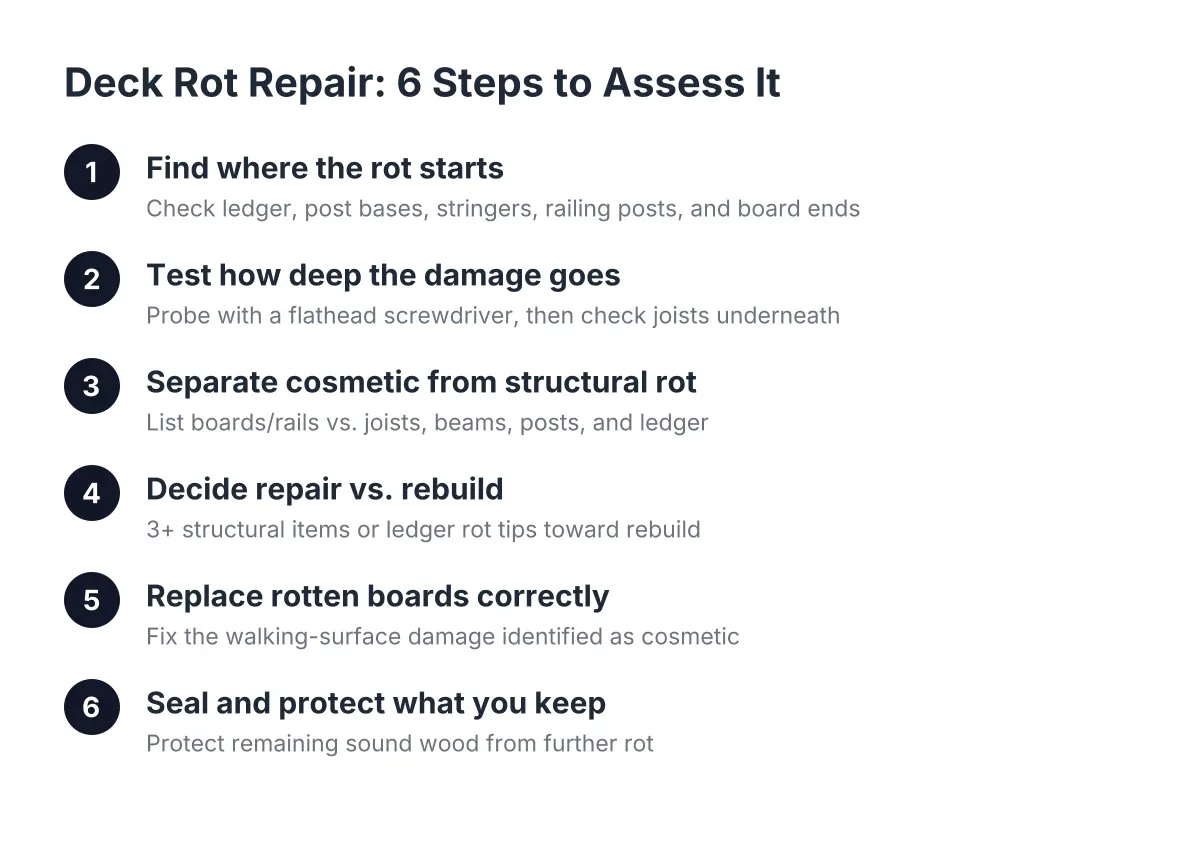
Step 1: Find Where the Rot Starts
Rot follows water, so start where water collects. Walk the whole deck and mark every suspect spot with painter's tape or chalk. You are looking for boards that feel spongy underfoot, wood that looks darker or greener than the rest, paint or stain that bubbles, and fasteners that have sunk below the surface.
Check these spots first, because they fail before anything else:
- The ledger board, where the deck attaches to the house. Water gets trapped behind it, and a rotted ledger is the most dangerous failure a deck can have.
- Post bases at ground level, especially posts set in or on concrete where water pools.
- Stair stringers and the bottom step, which stay wet longest.
- Railing posts, where the connection to the frame traps moisture.
- Board ends and any spot where two boards butt together.
- Around an above ground pool, the boards nearest the pool wall, where splash-out lands all season.
If you have a pool deck, pay extra attention to that splash zone. Pool water carries chemicals that speed up rot in untreated or poorly sealed wood, and the boards closest to the water get soaked every time someone climbs out.
Step 2: Test How Deep the Deck Wood Rot Damage Goes
To test the depth of deck wood rot damage, press a flathead screwdriver into every suspect spot. Sound wood resists and the tip barely marks it. Rotted wood lets the screwdriver sink in a quarter inch or more with light pressure, and the fibers crumble instead of splintering.
Probe each marked spot, then probe two inches away in wood that looks fine. Rot spreads under the surface, so the visible damage is usually smaller than the actual damage. If the screwdriver sinks in where the wood looks healthy, extend your tape marks outward until you hit solid wood.
Next, go under the deck if you can. Bring a flashlight and probe the joists, beams, and the underside of the boards you flagged from above. A board that is soft on top and solid underneath is a surface problem. A board that is soft all the way through means water has been sitting in that spot for years, and the framing below it needs a hard look.
Step 3: Separate Cosmetic Rot from Structural Rot
Cosmetic rot lives in the parts you walk on and touch: deck boards, railing caps, and stair treads. These pieces are designed to be replaced. Structural rot lives in the parts that hold everything up: joists, beams, posts, and the ledger. That distinction drives the whole repair-versus-rebuild decision.
Make two lists as you probe. Put every soft deck board, tread, and railing section on the cosmetic list. Put every soft joist, beam, post, or ledger finding on the structural list. Wobbly railing posts land on the structural list too, because the wobble usually means the framing connection behind them has rotted, not the post itself.
Here is a simple way to read your lists. A cosmetic list with ten items and an empty structural list points to repair. One or two structural items in an otherwise solid frame can often be sistered or replaced piece by piece. Three or more structural items, or any rot in the ledger, tips the math toward rebuild.
Step 4: Determine When Deck Rot Repair Is the Right Choice
Deck wood rot damage calls for a full rebuild when the rot has reached the ledger, multiple joists, or the posts and footings; it calls for repair when the damage stays in the walking surface and railings. Age matters too. Spot repairs on a frame past 20 years old often cost more over five years than replacing it once.
Repair usually makes sense when:
- Rot is limited to deck boards, treads, and railing parts.
- The frame is pressure-treated, under 15 years old, and probes solid.
- Footings have not heaved or sunk, and the deck sits level.
Rebuild usually makes sense when:
- The ledger shows any rot or the flashing above it has failed.
- Three or more joists or any beam or post is soft.
- Footings sit above the 42-inch frost depth WNY requires and have heaved, which no board replacement fixes.
- You would replace more than a third of the boards anyway. At that point, the labor overlaps heavily with a resurface or rebuild.
For a rough sense of scale, professional deck labor typically runs $15 to $35 per square foot, and a full professionally built deck averages $30 to $60 per square foot, according to NerdWallet. Therefore, a repair that touches half the structure can land closer to rebuild money than most homeowners expect. Get both numbers quoted before deciding; a good deck repair and restoration estimate should show you the repair path and the replacement path side by side.
One caution here: framing, ledger, and footing assessments are where a professional earns the visit. If your structural list has anything on it, or the deck is elevated, have a deck builder or inspector confirm your findings before anyone stands on that deck for a party. Searching for deck repair near me will surface options, but ask specifically whether they inspect framing and footings, not just boards.
Step 5: Replace Rotten Boards the Right Way
If you landed on repair, replace flagged boards fully rather than patching sections. Cut out the rotted board back to the nearest joists, check the joist tops underneath, and cover any weathered joist tops with joist tape before installing the new board. That tape keeps water out of the fastener holes, which is where the next round of rot usually starts.
Match the new board to the old decking in thickness, and expect a color difference for a season or two on wood. For a pool deck, this is also the moment to consider swapping the splash-zone boards to composite. Composite decking does not rot from splash-out or pool chemicals, and it handles Buffalo freeze-thaw cycles without the annual sealing that wood demands. Suppose a homeowner in Cheektowaga has an above ground pool deck where only the six boards along the pool wall keep rotting; in that scenario, replacing that splash zone with composite while the frame is still sound is a targeted fix, not a full rebuild.
Step 6: Seal and Protect What You Keep
Once the repairs are done, seal every wood surface, including cut ends. The best deck sealer for Western New York is a penetrating, water-repellent product rated for freeze-thaw exposure, applied to dry wood in fall before the snow or in spring after the melt. Film-forming sealers look good at first but peel under snow load and trap moisture underneath, which feeds the next round of rot.
In addition, fix the drainage problems that caused the rot. Clear the gaps between boards so meltwater drains through. Regrade or add splash blocks so downspouts do not dump onto the deck. On a pool deck, leave proper gapping near the pool wall so splash-out drains instead of pooling. Sealing rotted causes, not just rotted wood, is what makes the repair last.
Step 7: Plan the Rebuild If That Is the Answer
If your assessment points to replacement, treat it as a chance to build for this climate instead of against it. That means footings dug to the 42-inch frost depth, framing sized for lake-effect snow load, flashing done right at the ledger, and a permit filed with your town before work starts. Most Erie County towns require a permit for deck replacement, and pool decks are not exempt just because they are "only around a pool."
There is one upside to starting over. A rebuild lets you fix the original design problems, like a deck that never matched the pool height or stairs that ice over every winter. As of 2026, composite and PVC decking options handle WNY winters well enough that many homeowners rebuilding a rotted wood deck choose them to end the rot cycle for good. Whether you search for deck restoration near me or plan the rebuild yourself, the honest answer starts with the probe test, not the sales pitch.
If you need deck building, WNY Deck Builders can help.
Prefer to talk it through? Call (716) 317-4901 — a quick call is usually the fastest way to get a straight answer for your situation.