Deck Staining and Sealing Terms Explained: A Plain-English Glossary
If you are getting quotes to stain or seal a deck in Buffalo or anywhere in Western New York, the paperwork comes loaded with jargon. This deck staining and sealing glossary turns those terms into plain English so you can read a quote line by line, ask better questions, and spot a thin bid before you sign it. Every entry starts with a one-sentence definition you can use on its own. Keep it open while you compare providers.
- Deck Stain: colored finish that soaks into wood
- Deck Sealer: clear coat that blocks water
- Transparent, Semi-Transparent, and Solid Stain: how much wood grain shows
- Oil-Based vs. Water-Based Stain: the two main stain chemistries
- Film-Forming Finish: coating that sits on top of the wood
- Penetrating Finish: coating that soaks into the wood
- Mil Thickness: how thick a coating goes on
- Pressure Washing: cleaning wood with high-pressure water
- Deck Cleaner and Brightener: chemicals that prep wood for stain
- Sanding and Prep: smoothing wood so stain holds
- Moisture Content: how wet the wood is before coating
- Back-Brushing: working stain into the wood by hand
- Dry Time and Cure Time: when you can walk on it vs. when it is done
- Freeze-Thaw Cycle: winter's grip-and-release on your deck
- UV Degradation: sun damage that grays and dries wood
- Peeling and Flaking: finish failure you can see
- Square Footage Pricing: cost figured by deck size
- Recoat Schedule: how often the finish needs redoing
Finishes and Products in the Deck Staining and Sealing Glossary
These are the words on the product side of a deck staining and sealing glossary, the stuff that actually goes on the wood.
Deck Stain
A deck stain is a pigmented finish that adds color to wood while letting some grain show through. The pigment does double duty: it looks good and it blocks sunlight, which is what grays and dries out bare wood. Stain is the workhorse finish for pressure-treated decks across Western New York. If a quote says "stain only" with no sealer or sealing stain named, ask what is protecting the wood from water.
Deck Sealer
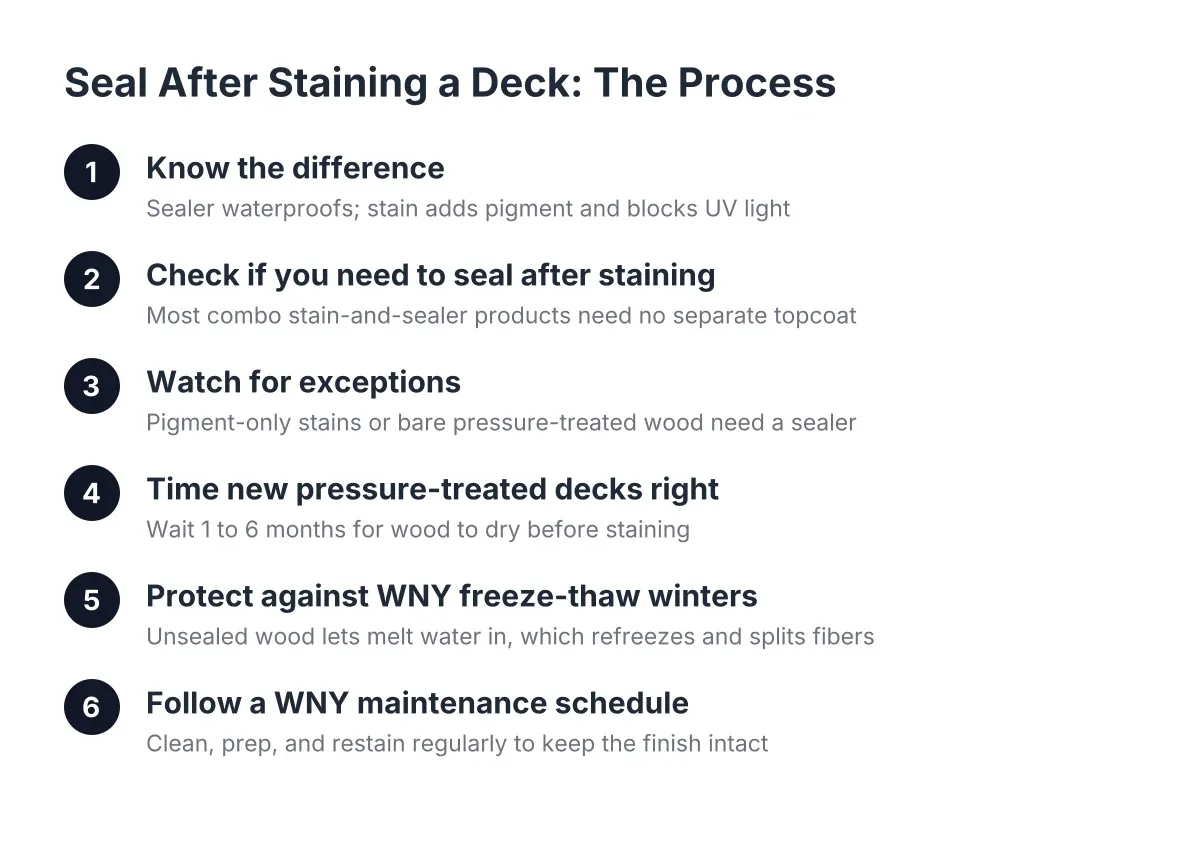
A deck sealer is a clear or near-clear coating that repels water without changing the wood's color much. Sealers fight moisture, which matters here because Buffalo decks soak up snowmelt for months. Pure clear sealers offer little sun protection, so many products combine stain and sealer in one can. When a provider quotes deck staining and sealing as one job, they usually mean a combined product or stain followed by a protective topcoat; ask which it is.
Transparent, Semi-Transparent, and Solid Stain
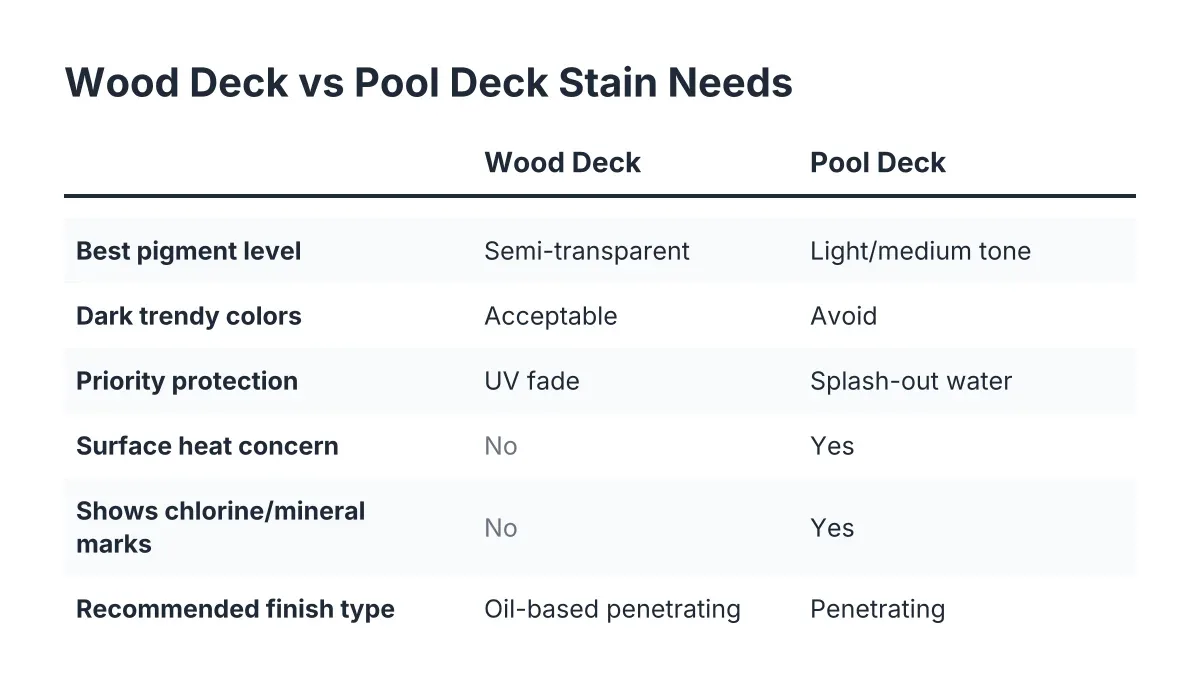
Transparent, semi-transparent, and solid are the three opacity levels of deck stain, meaning how much wood grain stays visible. Transparent shows the most grain and gives the least sun protection. Solid stain looks almost like paint, hides older wood well, and lasts longest, but it can peel instead of fading gracefully. Semi-transparent sits in the middle and is the common pick for decks in decent shape. The right choice depends on your wood's age and how much weathering it has taken.
Oil-Based vs. Water-Based Stain
Oil-based and water-based describe the two main stain chemistries, named for what carries the pigment into the wood. Oil-based stains penetrate deeper and are forgiving to apply; water-based stains dry faster, hold color longer in sun, and clean up with soap and water. Neither is automatically better. What matters more is matching the new product to whatever is on the deck now, since the two types do not always play well over each other.
Film-Forming Finish
A film-forming finish is a coating that builds a solid layer on top of the wood instead of soaking in. Paint and most solid stains work this way. The film sheds water well, but when it fails, it peels, and peeling means scraping or stripping before the next coat. On a WNY deck that sits under snow for months, a failed film is a bigger repair job than a faded penetrating stain.
Penetrating Finish
A penetrating finish is a stain or sealer that soaks into the wood fibers rather than sitting on the surface. Because there is no film, there is nothing to peel; the finish fades out instead. That makes recoating simpler: clean and reapply. Most pros steer newer pressure-treated decks toward penetrating products for exactly that reason.
Mil Thickness
Mil thickness means how thick a coating is applied, measured in mils, where one mil is a thousandth of an inch. You will see it on film-forming product specs and sometimes in detailed quotes. Too thin and the coating fails early; too thick and it can crack or stay tacky. You do not need to measure it yourself, but a provider who talks about application thickness is thinking about durability, not just color.
Prep and Process for Deck Staining and Sealing
Prep is where good jobs and bad jobs split. These terms tell you what a provider actually plans to do before the stain comes out.
Pressure Washing
Pressure washing is cleaning a deck with a machine that sprays water at high pressure to strip dirt, mildew, and loose finish. Done right, it is the fastest way to prep a deck. Done wrong, too much pressure gouges the wood fibers and leaves fuzzy marks that show through stain. Ask whether washing is included and whether the deck gets drying time afterward, since staining wet wood is a common cause of early failure.
Deck Cleaner and Brightener
A deck cleaner and brightener are two prep chemicals: the cleaner lifts dirt and mildew, and the brightener restores the wood's pH and color after cleaning. Skipping the brightener after a strong cleaner can leave wood dark and keep stain from bonding well. A quote that lists both tells you the provider preps by the book. A quote that lists neither deserves a question.
Sanding and Prep
Sanding and prep means smoothing rough or splintered wood and fixing small problems before any finish goes on. That can include setting popped nails, replacing a split board, and feathering out old peeling finish. If boards are failing underneath, prep turns into deck repair, which is a different scope and a different price. Good quotes separate prep work from coating work so you can see where the money goes.
Moisture Content
Moisture content is the amount of water inside the wood, usually checked with a handheld meter before staining. Stain will not soak into wet wood, and finish applied over damp boards tends to blister or peel. After a pressure wash or a Buffalo spring, a deck can need days to dry down. A provider who mentions moisture readings is protecting your finish, not padding the schedule.
Back-Brushing
Back-brushing means going over sprayed or rolled stain with a brush while it is still wet to work it into the wood. Spraying alone leaves stain sitting on the surface, where it dries unevenly and wears fast. Back-brushing takes more labor, which is one honest reason two quotes for the same deck can differ. It is a fair question to ask any provider: spray only, or spray and back-brush?
Dry Time and Cure Time
Dry time is when a finish can take light foot traffic, and cure time is when it reaches full hardness, which can take days longer. Moving the grill back too early can mark a finish that felt dry to the touch. Cool, damp weather stretches both numbers, which is why WNY staining season is shorter than the calendar suggests. A realistic quote builds weather into the schedule instead of promising a fixed day.
Weather and Wear
Western New York weather is the reason this work exists. These terms explain what the climate does to a deck.
Freeze-Thaw Cycle
A freeze-thaw cycle is one round of water soaking into wood, freezing, expanding, and thawing again. Each cycle pries the wood fibers apart a little, and Buffalo winters deliver a lot of cycles. That expansion is what opens checks and cracks in unsealed boards. Sealing before winter limits how much water gets in to freeze in the first place, which is the whole point of the job.
UV Degradation
UV degradation is sun damage that breaks down the surface of wood, turning it gray and making it dry and brittle. It happens even in cloudy climates; snow glare in winter adds to it. Pigment in stain is the main defense, which is why clear sealers alone let wood gray out. If your deck is already silver-gray, expect the quote to include cleaning or brightening to get back to stainable wood.
Peeling and Flaking
Peeling and flaking are visible finish failures where the coating lifts off the wood in sheets or chips. They usually trace back to one of three causes: staining damp wood, skipping prep, or putting a film-forming product over a finish it cannot grip. Fixing it means stripping or sanding off the failed coating, which costs more than a simple recoat. This is the problem photo to show any provider before they quote.
Pricing and Paperwork
Square Footage Pricing
Square footage pricing means the quote is based on the deck's surface area, often with railings, stairs, and benches counted separately. It is the standard way staining work gets priced, and it makes quotes easier to compare. Watch what is and is not in the square footage number: railings take a surprising share of the labor. The cost guide for deck staining and sealing walks through the factors that move the number up or down.
Recoat Schedule
A recoat schedule is the expected interval before the finish needs another coat, which varies by product type and exposure. Penetrating stains tend to need recoating sooner but cheaper; solid stains last longer but fail harder. Sun exposure, snow sitting on the boards, and foot traffic all shorten the interval. A provider who gives you a realistic recoat expectation is being straight with you; one who implies the finish is permanent is not.
Using These Terms
That is what this deck staining and sealing glossary gives you: the vocabulary to read a quote line by line instead of skimming to the total. You can now ask whether the job includes brightener, back-brushing, and moisture checks, and you will understand the answers. The provider who explains these terms without flinching is usually the one who does the work right.
If you need deck building, WNY Deck Builders can help.
Prefer to talk it through? Call (716) 317-4901 — a quick call is usually the fastest way to get a straight answer for your situation.