Deck Stain Colors That Survive Buffalo Winters: 8 Picks for Snow, Salt, and Freeze-Thaw
Most advice about deck stain colors comes from warm states where a deck never sees lake-effect snow, a shovel blade, or a month of freeze-thaw cycling. In Buffalo and the rest of Western New York, color choice is not just a style decision. The pigment in your stain is the sunscreen and the raincoat for your deck boards, and the wrong pick fails fast here. We build and repair decks in this climate, including pool decks that take chlorinated splash-out all summer and snow load all winter. The finish failures we see on repair calls almost always trace back to the same handful of choices. This list covers what actually holds up.
One note before the list. Color and finish type travel together. A "color" on the shelf at a big box store is really a pigment load plus a resin system, and both matter more in WNY than they do in Georgia. Keep that in mind as you read.
1. Pigment load matters more than the deck stain colors you love
The single biggest driver of how long a stain lasts in Western New York is how much pigment it carries, not which shade you like. Clear sealers and light toners look great for one season, then UV and freeze-thaw break them down and gray the wood underneath. Semi-transparent stains last noticeably longer, and solid stains last longest of all because pigment blocks the UV that degrades wood fibers.
Here is the practical ladder, from shortest life to longest in our climate:
- Clear sealer or toner: shows the most wood grain, needs recoating as often as every year here
- Semi-transparent: the sweet spot for most wood decks, grain still visible, decent UV protection
- Semi-solid: more pigment, less grain, longer intervals between recoats
- Solid stain: hides grain like paint, best UV protection, but peels instead of fading when it fails
If you love the look of bare cedar, understand the trade-off. You are signing up for more frequent deck staining and sealing to keep that look alive through our winters.
2. Mid-tone browns and cedar tones hide what Buffalo throws at a deck
Mid-tone browns, cedar, and chestnut shades are the workhorse deck stain colors for WNY because they hide the two things our decks collect: gray weathering and winter grime. Dark colors show salt residue, pollen, and dried snow-melt haze. Light colors show dirt, rust from furniture, and every scuff from a snow shovel.
A mid-brown semi-transparent splits the difference. It masks the slow graying between recoats, it does not show tracked-in salt the way espresso or charcoal does, and it does not telegraph every boot print the way pale gray or white-washed tones do. It is the color family we point most homeowners toward when they ask what will still look decent in year three.
3. Skip the dark, trendy colors on a pool deck
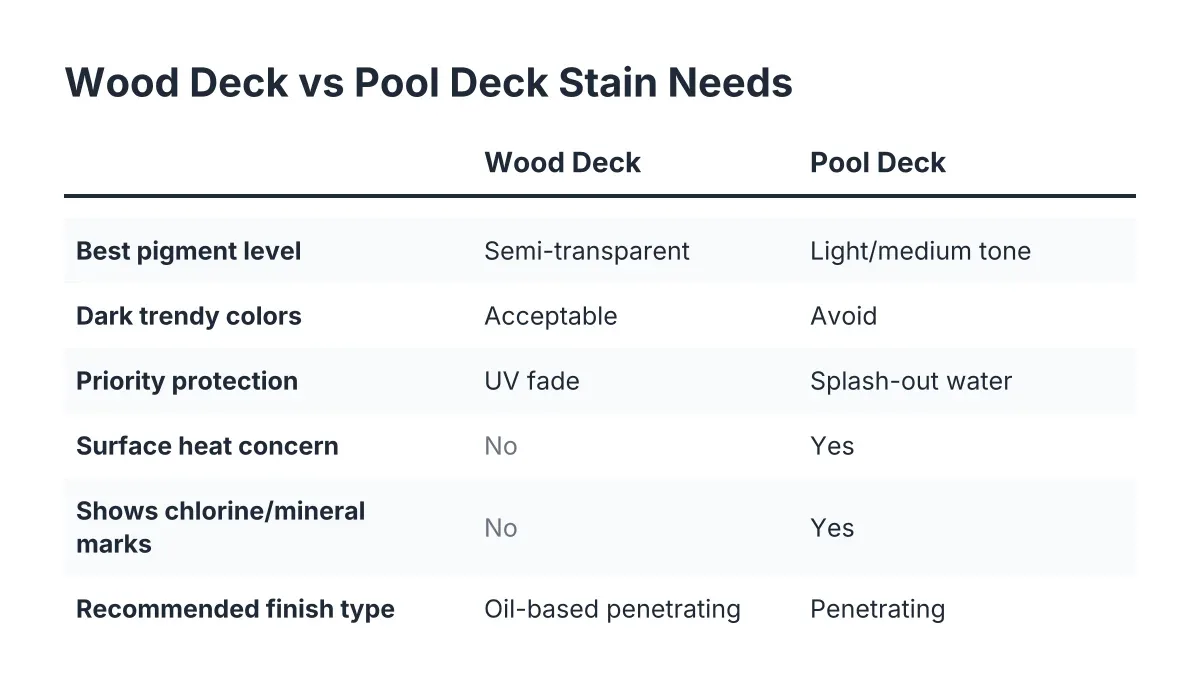
Dark deck stain colors like espresso, slate, and black absorb heat, and on a pool deck that means hot boards under bare feet in July. Around an above ground pool, where kids go from water to deck surface constantly, surface temperature is a real comfort and safety issue, not a design footnote.
Dark colors also show chlorine splash marks and dried water spots more than lighter shades do. For example, suppose a homeowner in Cheektowaga stains the new deck around their above ground pool a deep walnut in June. By August, every splash zone near the ladder shows a pale ring of mineral and chlorine residue. A lighter cedar or driftwood tone would have hidden most of that. If you want a modern gray, pick a light-to-medium gray rather than charcoal.
4. On pressure treated wood, let the boards dry before any color goes on
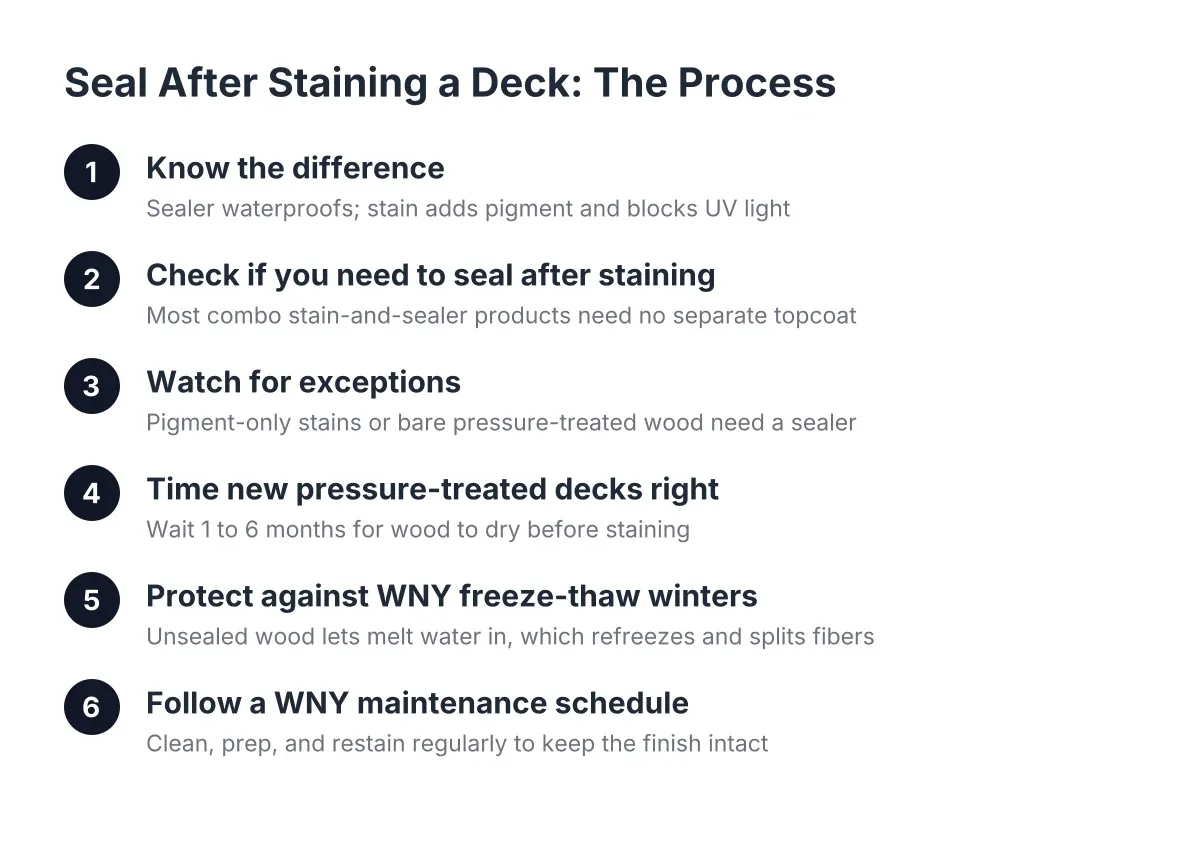
Staining a new pressure treated deck too early is the most common finish failure we see, and no color choice can save it. New pressure treated lumber arrives saturated with water-based preservative. Stain applied over wet boards cannot penetrate, so it sits on the surface and peels within a year, usually right as the first winter ends.
The fix is patience. Most pressure treated decking needs a drying period after installation, often a few months depending on when it was built and how much sun it gets. A simple test: sprinkle water on a board. If it soaks in within a minute or so, the wood is ready. If it beads, wait. Semi-transparent stains on pressure treated wood also look different than the chip on the can, because the green or brown treatment tint shifts the final shade. Test a hidden board first.
5. Oil-based penetrating stains handle freeze-thaw better than film-formers
For wood decks in a freeze-thaw climate, an oil based stain for pressure treated wood generally outlasts products that form a film on the surface. The reason is physics, not brand loyalty. Water gets into deck boards, freezes, and expands. A finish that penetrates the wood flexes with that movement. A finish that sits on top as a film cracks, lets water in behind it, and then peels in sheets come spring.
Peeling is worse than fading because trapped water behind a failed film is how rot starts, especially on horizontal boards where snow sits for months. This is the failure pattern behind many of the rotting deck boards we get called to repair in April. When you compare products, the words to look for are "penetrating" and "oil-based" or "oil-modified," not the color name on the front of the can.
6. Match the finish to the job: pool decks need splash-out protection, not just UV protection
A pool deck has a different enemy list than a backyard patio deck. Chlorinated splash-out, constant wet-dry cycling near the ladder and entry, and bare feet all change what the right finish looks like. UV fade matters, but water penetration at the splash zone matters more.
For a wood deck attached to an above ground pool, that means a penetrating water-repellent stain, a color light enough to stay cool, and a texture that is not slick when wet. Glossy film finishes are the wrong answer twice over: they get slippery and they peel at the waterline traffic path. This is also why many pool deck owners in WNY eventually move to composite deck boards, which skip the staining cycle entirely. Composite costs more up front, and the color you pick is permanent, so choose carefully; there is no restaining a composite deck a new shade in five years.
7. Clean in fall, recoat in late spring: the WNY maintenance calendar
How often to stain a deck in Western New York depends on the finish, but the calendar rhythm is the same every year. Deck cleaning before winter is the step most homeowners skip, and it is the cheap one. Leaves and debris left on boards through the winter trap moisture against the wood for months, which feeds rot and stains the finish.
A workable schedule for a wood deck here looks like this:
- Early fall: sweep thoroughly, clean with a deck cleaner, clear gaps between boards so meltwater can drain
- Winter: shovel with a plastic blade along the boards, not across them, and go easy on salt
- Late spring: inspect for peeling and gray spots, wash, let the wood dry fully, then recoat as needed
- Midsummer: rinse pool decks periodically to cut chlorine and mineral buildup
As a rule of thumb, semi-transparent finishes here need recoating about every two to three years, solid stains somewhat longer, and clear sealers often every year. Your deck's sun exposure and drainage will move those numbers.
8. Go easy on the pressure washer and think twice about the sprayer
Pressure washing a wood deck at full power tears up the soft grain, raises fuzz, and opens the surface so it soaks up water faster, which is the opposite of what you want before winter. Use a low-pressure fan tip, keep the wand moving, and let a deck cleaner do the chemical work instead of blasting.
Application method matters too. Staining a deck with a sprayer is fast, but on a windy WNY afternoon it drifts onto siding, pool walls, and fences, and it tends to lay stain on the surface rather than working it in. If you spray, back-brush every pass so the stain penetrates. For most homeowners, a pad applicator or brush on a calm, dry day between about 50 and 85 degrees gives a more durable result than a rushed spray job.
How WNY weather narrows your deck stain color choices
Western New York weather cuts the field of deck stain colors down to the ones that manage heat, hide grime, and ride out freeze-thaw movement. That points most wood deck owners toward mid-tone browns and cedars in a penetrating semi-transparent or semi-solid finish, and it points pool deck owners away from dark, heat-holding shades and slick film finishes.
The honest limitation: no stain color or schedule fixes a deck with structural problems. If boards are spongy, if the framing underneath holds water, or if the deck around your pool was built without proper footings and drainage, the finish is the least of your worries. That is a job for a deck builder to assess, not a weekend of staining. A sound deck with the right finish, though, can shrug off a Buffalo winter and be ready for the pool to open in June. Pick the pigment first, respect the drying time, and clean before the snow flies. The color will take care of itself.
If you need deck building, WNY Deck Builders can help.
Prefer to talk it through? Call (716) 317-4901 — a quick call is usually the fastest way to get a straight answer for your situation.