Composite vs. Pressure-Treated Decking Above Ground Pools: A Builder’s Guide
If you just put in an above ground pool, you have probably noticed something. The pool company delivered the pool, filled it, and left. Nobody planned the deck. Now you are standing in the yard trying to figure out how people will actually get in and out of the water, and the first big decision is material. Choosing between composite vs pressure-treated decking above an above ground pool is not the same choice as picking boards for a patio deck. Pool decks live a harder life: constant splash, chlorine, bare feet, and, here in Buffalo, a freeze-thaw cycle that punishes anything built wrong.
This guide walks through the decision step by step, the way a deck builder would walk it with you in the backyard. The short version: pressure-treated wood wins on upfront cost, composite wins on everything that touches wet skin and pool chemicals. But the right answer depends on your budget, your pool height, and how long you plan to own the place. Here is how to work through it.
Step 1: Understand Why a Pool Deck Is a Structural Job, Not an Add-On
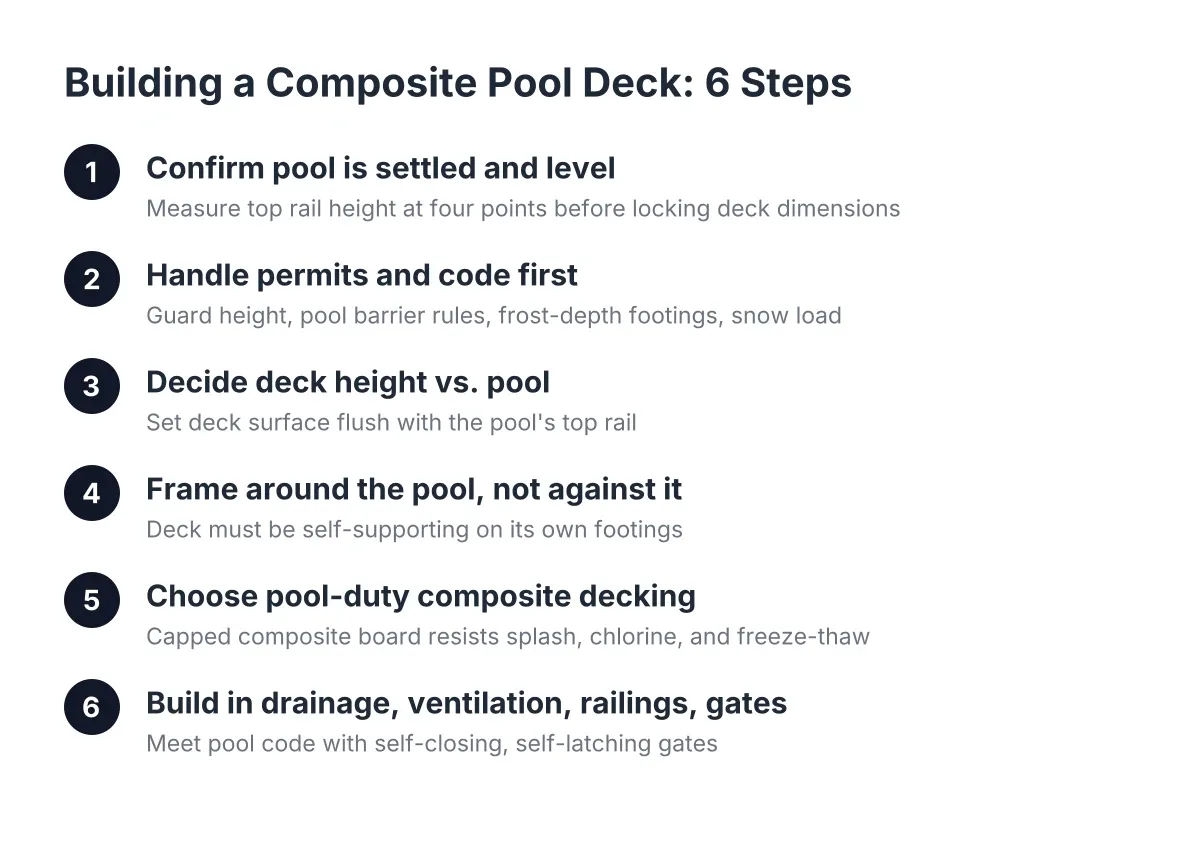
Before comparing boards, get clear on what you are actually building. A pool deck is not a floating platform you drop next to the pool. It has to hold a fixed height relative to the pool wall, carry snow load through a Western New York winter, and stay put while the ground around it heaves and settles.
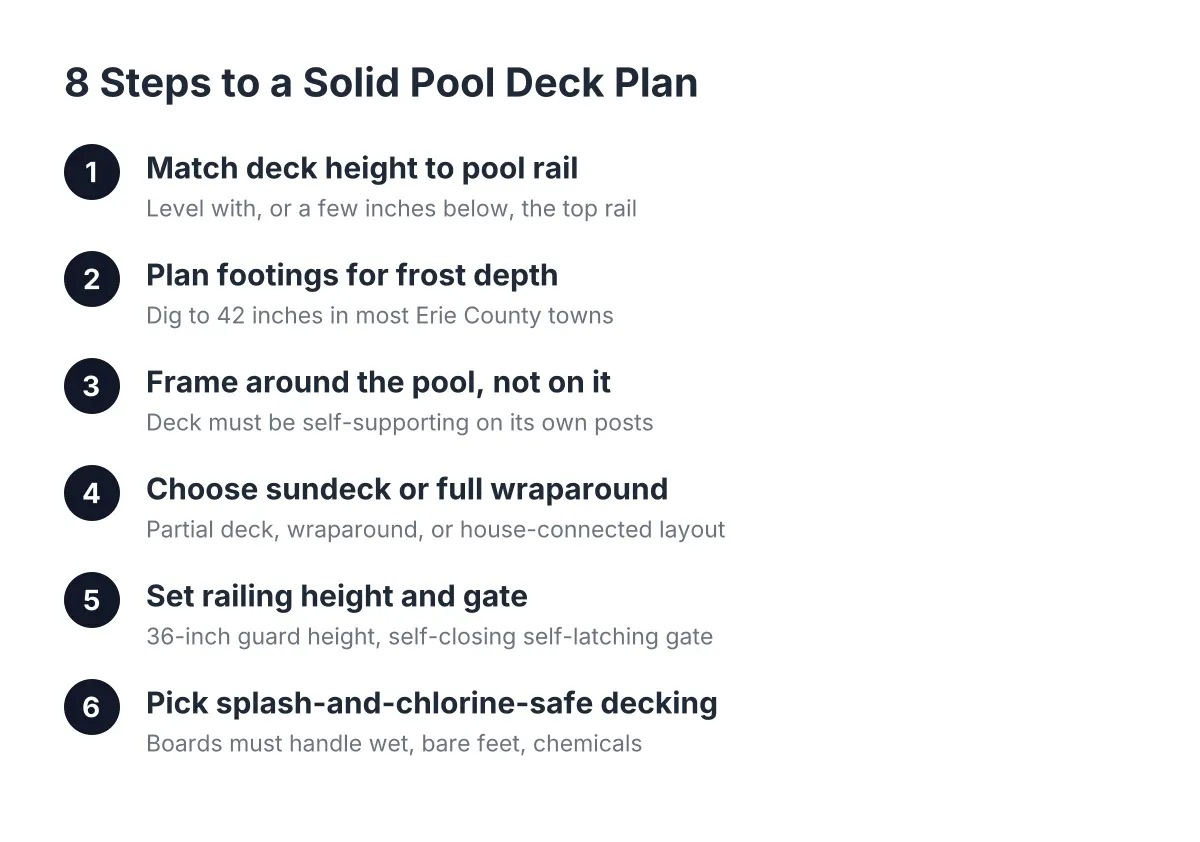
That means real footings. In Erie County, deck footings need to reach 42 inches below grade to get under the frost line. A deck built on shallow blocks will lift and drop with every freeze-thaw cycle, and next to a pool that movement shows up fast. The deck rises, the pool does not, and suddenly there is a two-inch trip lip right where kids climb out of the water.
The decking material sits on top of all that framing. So the honest framing note first: whether you choose composite or pressure-treated boards, the structure underneath is pressure-treated lumber either way. Composite is a surface material, not a structural one. The comparison in this article is about the walking surface, the part your family touches every day.
Step 2: How Composite vs Pressure-Treated Decking Perform Above Water
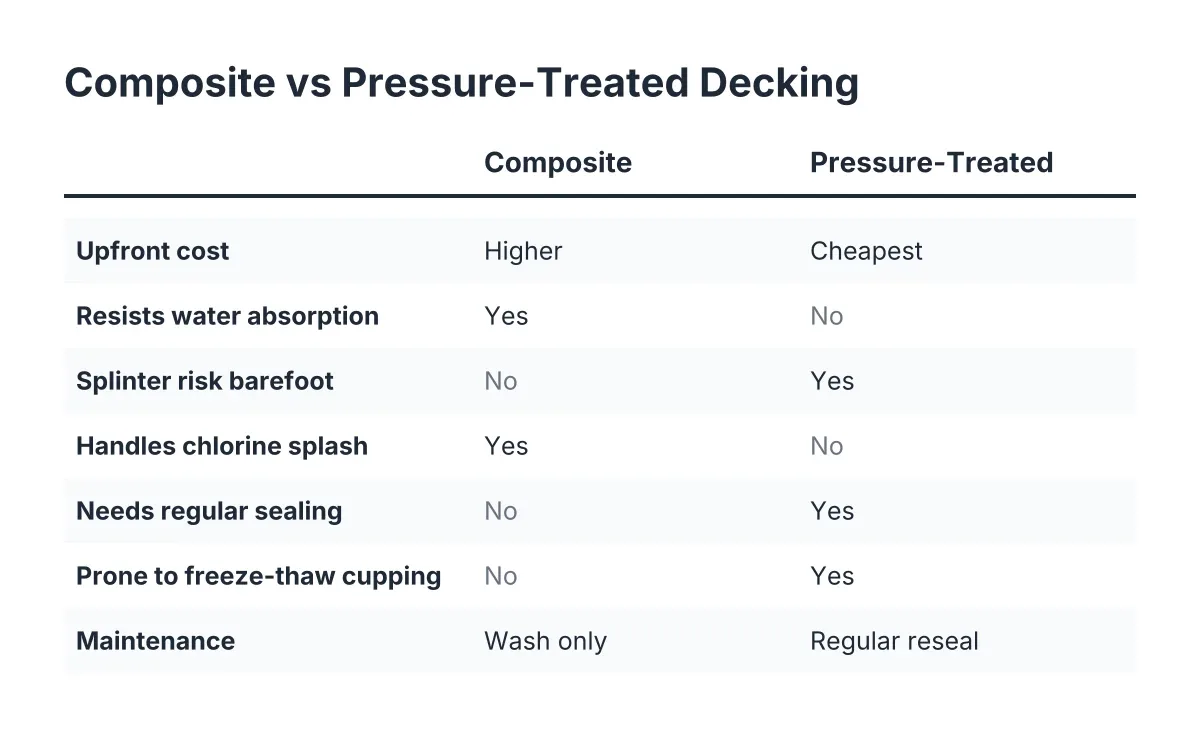
Which is better around an above ground pool, composite or pressure-treated decking? For the walking surface around a pool, composite decking generally outperforms pressure-treated wood because it resists water absorption, will not splinter under bare feet, and shrugs off chlorine splash. Pressure-treated wood costs less upfront but demands regular sealing to survive the constant wet-dry cycle at the pool's edge.
Here is the longer version, trait by trait:
- Splash and moisture. The three feet of decking next to the pool wall gets soaked daily all summer. Composite does not absorb that water. Pressure-treated wood does, and repeated soaking and drying opens checks and raises grain.
- Bare feet. Pool decks are barefoot decks. Aging pressure-treated boards splinter. Composite stays smooth for its lifespan, though darker composite colors get hot in direct sun, which matters on a July afternoon.
- Chemicals. Chlorinated splash and drips from wet swimsuits bleach and dry out wood over time. Composite handles it without changing much.
- Maintenance. Pressure-treated decking above a pool needs cleaning and resealing on a regular schedule to keep water out. Skip two seasons and the boards near the water show it. Composite needs a wash.
- Winter. Water that soaks into wood freezes and expands. That freeze-thaw action is why so many 15-year-old wood pool decks in WNY have cupped, cracked boards at the pool edge while the boards ten feet away still look fine.
- Upfront cost. Pressure-treated wood is the cheapest decking you can buy. Composite boards cost more, often two to three times more for the material itself, though the framing cost underneath is the same either way.
Neither material is wrong. They are trading different things: money now versus maintenance later.
Step 3: Get the Deck Height Right Before You Pick a Board
How high should a deck be around an above ground pool? The deck surface should sit level with, or no more than a few inches below, the top rail of the pool. Most above ground pools stand 52 to 54 inches tall, so the deck lands in that range, which triggers real code requirements for railings and stairs.
This is where the structural side matters more than the board choice. Once a deck's walking surface is more than 30 inches above grade, New York's residential code requires a 36-inch guard height, according to Mister Baluster. A pool-height deck is well past that threshold, so you need code-compliant deck railing, proper stair geometry, and often a self-latching gate to control pool access.
Height also drives framing. A 52-inch-tall deck is an elevated deck, with posts, beams, and bracing sized for snow load, not a ground-hugging platform. If your yard slopes, one side of that deck might be 52 inches up and the other side 70. That is a multi-level framing problem, and it is exactly the kind of job where a deck builder who does elevated and multi-level deck construction earns their fee over a general handyman.
Step 4: Plan the Framing Around the Pool's Shape
Round pools create the framing puzzle. Deck boards are straight; pool walls curve. Framing a deck around a round pool means building a series of short, angled joist bays that step around the curve, then trimming the decking to follow the radius with a consistent gap.
That gap matters. Leave the decking a small, even distance off the pool wall so the pool can flex when it is full and so water drains through instead of pooling against the wall. Butting boards tight to the pool traps water, and trapped water plus a Buffalo winter equals rot in wood or a stressed pool wall either way.
One more structural rule worth knowing: the deck should never bear on the pool. An above ground pool wall is not designed to carry deck loads. A deck attached to a pool for support will deform the wall over time. The deck stands on its own footings, and the pool sits inside it. Drainage under the deck matters too; grade the ground so splash water runs away from both the footings and the pool base.
Step 5: Run the Numbers Honestly for Your Timeline
What does the composite versus pressure-treated choice actually cost? The gap is real but smaller than people expect, because labor and framing are the same for both. Professional deck labor typically runs $15 to $35 per square foot, and a full professionally built deck averages $30 to $60 per square foot, according to NerdWallet citing Angi. The board choice moves the material line, not the labor line.
Suppose a homeowner in Cheektowaga is planning a 300-square-foot deck around a 24-foot round pool in spring 2026. In that hypothetical, pressure-treated decking might save a few thousand dollars on day one. Over ten years, add the cost of stain or sealer every couple of seasons, plus the weekends spent applying it, plus a likely board-replacement round near the pool edge around year eight or ten. Composite skips most of that. On a short timeline, wood often pencils out. If you plan to be in the house 15 years, composite usually wins the total-cost math.
There is a resale angle too. Homeowners recover 89% of the cost of a new wood deck at sale, according to the National Association of Realtors' 2023 Remodeling Impact Report as reported by NerdWallet. A deck is one of the few backyard projects that holds value either way.
For pool deck ideas for above ground pools on a tight budget, a hybrid approach works: build a smaller composite sundeck at the pool entry, sized for the ladder, a gate, and two chairs, and leave room to expand later. That is one of the more practical above ground pool deck ideas on a budget, because it puts the durable material where the splash is and defers the square footage you can add next year.
Step 6: Handle Permits and Know When to Bring in a Builder
Do you need a permit for an above ground pool deck in Western New York? Yes, in nearly every Buffalo-area town. A pool-height deck exceeds the 30-inch threshold that triggers permit review, and most towns also enforce pool barrier rules tied to gates and railing height. Your town's building department will want a plan showing footings, framing, and guard details.
Permit paths vary by town, so check with your local building department before finalizing a design; fee structures and setback rules differ across Erie County. This is also the honest line on DIY. Decking boards are a manageable weekend skill. A 52-inch elevated deck with 42-inch frost footings, snow-load framing, and code railings around water is not, and a mistake there is a safety problem, not a cosmetic one. If any part of the structure is over your head, that is the part to hand to a professional.
The Bottom Line for Buffalo Pool Owners
Above ground pool decks fail at the waterline first, so put your money where the water is. Composite decking above pressure-treated framing is the combination most WNY pool decks end up with for good reason: wood does the structural work it is best at, out of the sun and splash, while composite takes the abuse on top.
If the budget will not stretch, pressure-treated decking is a legitimate choice; just commit to the sealing schedule and expect to replace edge boards sooner. Either way, get the height, footings, and railings right first. Boards can be swapped in a weekend someday. A frost-heaved frame next to a full pool cannot.
If you need deck building, WNY Deck Builders can help.
Prefer to talk it through? Call (716) 317-4901 — a quick call is usually the fastest way to get a straight answer for your situation.