Above Ground Pool Decks Terms Explained: A Plain-English Glossary
If you're getting quotes for a pool deck in Buffalo or anywhere in Western New York, the paperwork fills up fast with words nobody explains. This above ground pool decks glossary breaks down the terms you'll see in quotes, permits, and material lists in plain English. Use it to read a bid line by line, ask sharper questions, and spot the difference between a solid plan and a vague one. No sales pitch, just the words and what they mean for your project.
- Footings: the concrete anchors under everything
- Frost Depth: how deep footings must go here
- Framing: the skeleton under the deck boards
- Joists: the boards that carry the walking surface
- Ledger vs. Freestanding Deck: attached to the house or not
- Snow Load: the weight your deck must be built to carry
- Composite Decking: wood-plastic boards that skip staining
- Pressure-Treated Lumber: wood treated to resist rot
- PVC Decking: all-plastic boards, no wood inside
- Fasteners and Hidden Fasteners: what holds the boards down
- Deck Railing and Baluster Spacing: the safety barrier rules
- Pool Coping Gap: the space between deck and pool wall
- Self-Closing Gate: the pool-safety gate requirement
- Building Permit: the town's sign-off before you build
- Freeze-Thaw: the WNY cycle that wrecks bad decks
- Drainage and Grading: where the water goes
- Load-Bearing Posts: the vertical supports holding it all up
- Wraparound vs. Side Deck: how much of the pool you surround
Structure and Framing: Key Terms for Above Ground Pool Decks
These are the words that describe what holds your pool deck up. Most of the cost and most of the risk lives here, so this is where an above ground pool decks glossary earns its keep.
Footings
A footing is a concrete anchor set in the ground that supports each post under your deck. Footings keep the deck from sinking, tilting, or heaving when the ground freezes. In Western New York, footings need to reach below the frost line, which means deeper holes and more concrete than in warmer climates. If a quote skips footings or proposes surface blocks for a raised pool deck, ask how the deck will stay level after a few winters.
Frost Depth
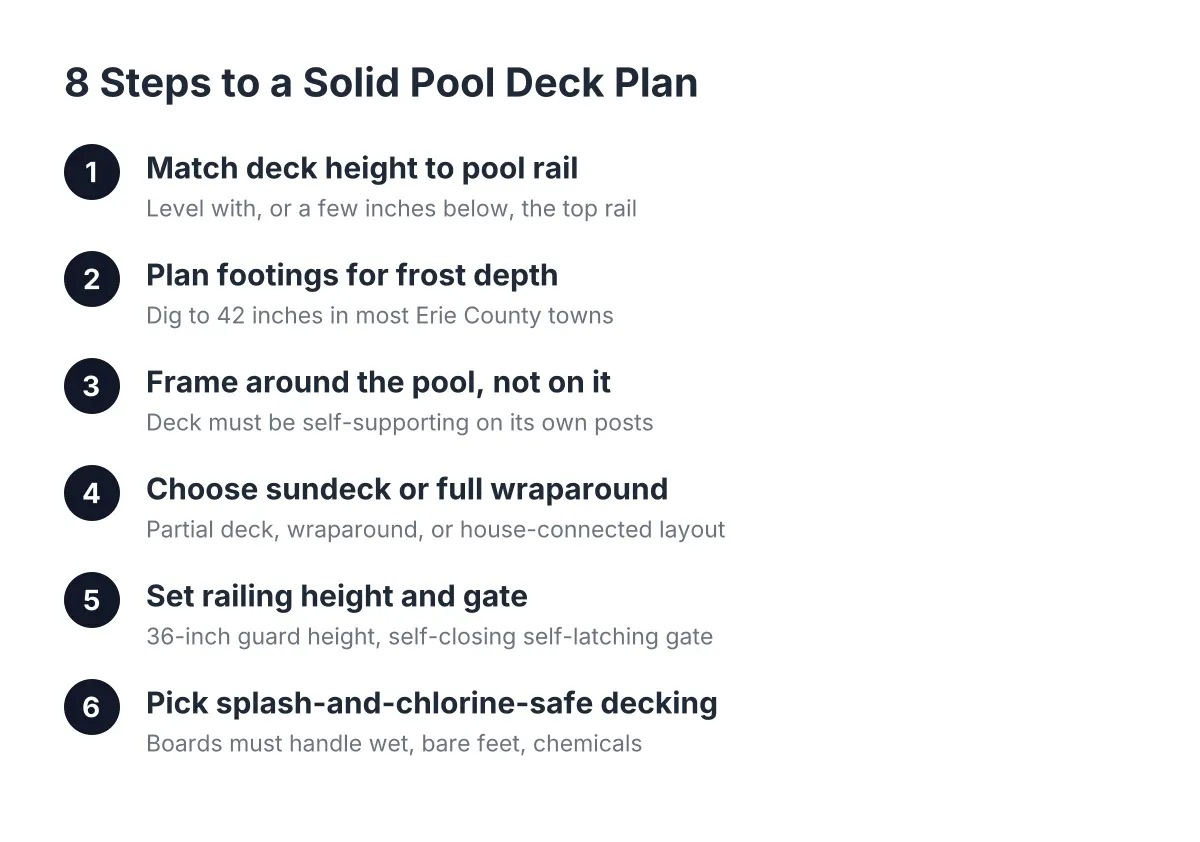
Frost depth is how far down the ground freezes in winter, and footings must extend below it to stay put. Around Buffalo, that typically means digging to 42 inches. When soil above the frost line freezes, it expands and can lift anything sitting in it, a problem called frost heave. A builder who mentions frost-depth footings without prompting is planning for WNY winters, not just a mild-climate template.
Framing
Framing is the structural skeleton of the deck: the posts, beams, and joists that carry everything above them. The decking boards you see are cosmetic by comparison; the framing does the real work. Framing lumber, hardware, and spacing decisions drive a big share of the cost, so ask what the frame is built from and how it's sized for snow. Undersized framing is the most common shortcut in a low bid.
Joists
Joists are the parallel boards in the frame that directly support the deck boards you walk on. How far apart they sit, called joist spacing, depends on the decking material; composite boards often need closer spacing than wood. If you switch from wood to composite decking mid-quote, the joist plan may need to change too. Tighter spacing means more lumber and more labor, which is one reason material choice affects framing cost.
Ledger vs. Freestanding Deck
A ledger is a board that attaches a deck to the house, while a freestanding deck supports itself on its own posts and footings. Most above ground pool decks are freestanding because they wrap a pool out in the yard, not against the house. Freestanding decks avoid the flashing and waterproofing risks that come with bolting into your siding. If your pool sits near the house, ask the builder which approach they recommend and why.
Snow Load
Snow load is the weight of snow a deck must be designed to carry, measured in pounds per square foot. Buffalo's lake-effect snow makes this a real design factor, not a formality. A deck framed for snow load uses beefier posts, beams, and footings than one designed for a snow-free region. Ask any WNY builder how their framing plan handles snow load; a specialist will have a ready answer.
Load-Bearing Posts
A load-bearing post is a vertical support that transfers the deck's weight down to its footing. Post size, spacing, and how posts connect to beams all affect how solid the deck feels underfoot. Metal connectors between posts, beams, and footings resist uplift and shifting better than nails alone. If a quote lists post hardware by type, that's a sign the builder is thinking about the connections, not just the lumber.
Decking Materials and Hardware for Above Ground Pool Decks
Composite Decking
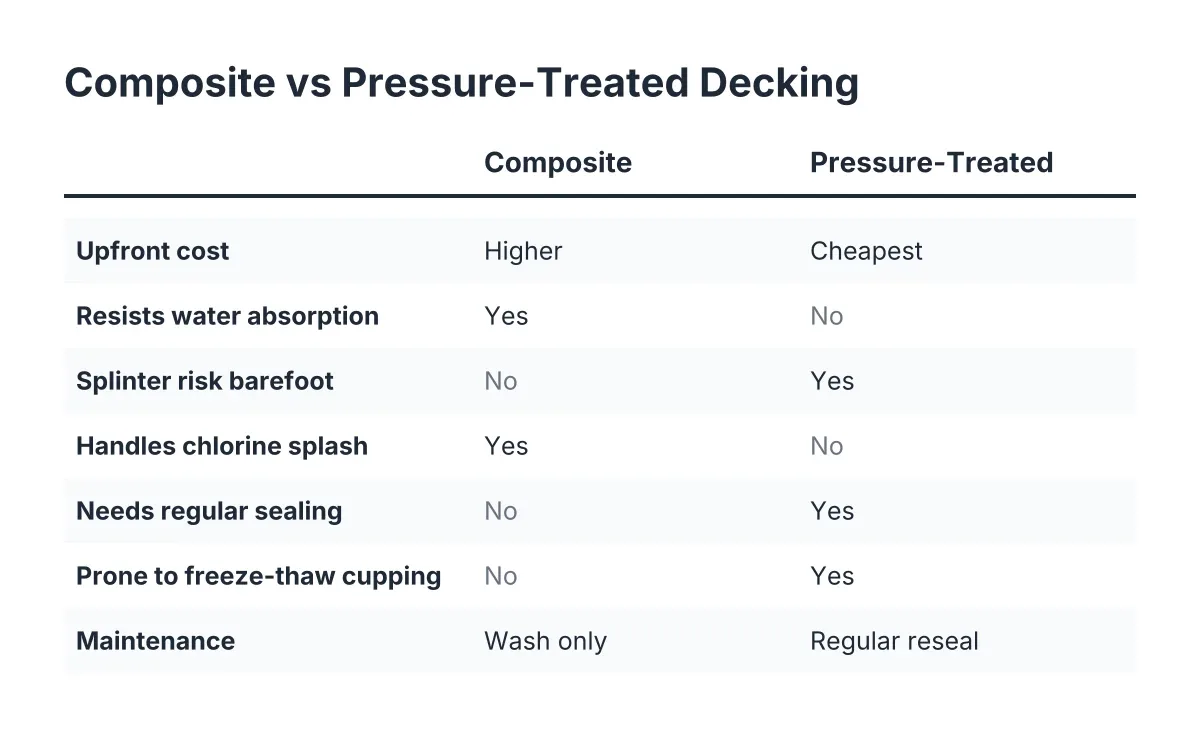
Composite decking is a board made from a blend of wood fibers and plastic that resists rot, splinters, and fading better than plain wood. It costs more up front than pressure-treated lumber but skips the yearly staining and sealing. Around a pool, composite also handles constant splashing better than untreated wood. For a deeper comparison, see this builder's guide to composite vs. pressure-treated decking for pool decks.
Pressure-Treated Lumber
Pressure-treated lumber is wood infused with preservatives under pressure so it resists rot and insects. It's the budget-friendly choice for pool deck framing and decking, and nearly all deck frames use it even under composite boards. The trade-off is maintenance: it needs periodic staining or sealing to look good and last, especially near pool water. Expect any honest quote to specify pressure-treated lumber for the frame regardless of what goes on top.
PVC Decking
PVC decking is an all-plastic board with no wood content, which makes it the most water-resistant decking option. That matters around a pool, where boards stay wet for hours after every swim. PVC typically costs more than composite, and some products get warmer underfoot in direct sun, so ask about barefoot comfort. It's worth a look if you want the lowest-maintenance surface available.
Fasteners and Hidden Fasteners
Fasteners are the screws and clips that hold deck boards to the joists, and hidden fasteners attach boards from the side or below so no screw heads show. Around a pool, hidden fasteners mean no exposed metal to snag bare feet or swimsuits. They add material and labor cost, so a quote using them will run higher than one with face screws. Either approach works structurally; this is a comfort and appearance decision.
Safety, Layout, and Pool-Specific Terms
Deck Railing and Baluster Spacing
Deck railing is the barrier around a deck's edge, and baluster spacing is the gap between the vertical pickets in that railing. Codes commonly limit those gaps so a small child can't slip through, and they set minimum railing heights for elevated decks. Pool decks sit several feet up, so railing isn't optional. Check your local code, and expect railing style to be one of the bigger cosmetic decisions in your quote.
Pool Coping Gap
The pool coping gap is the small space left between the deck edge and the top rail of the pool wall. It exists because the deck and the pool move differently as ground freezes, thaws, and settles; a deck built tight against the pool can damage the pool wall. A good builder plans this gap so it's safe for bare feet but still allows movement. If a quote shows the deck resting on the pool structure, ask about it.
Self-Closing Gate
A self-closing gate is a gate that swings shut and latches on its own, commonly required where a deck gives access to a pool. The point is simple: a child can't reach the water through a gate someone forgot to close. Latch height and swing direction often matter under local rules too. Ask your builder how the gate and stairs fit into the pool-safety plan for your yard.
Wraparound vs. Side Deck
A wraparound deck surrounds the full pool, while a side deck covers one section of the pool's edge. This single layout choice drives more of the cost than almost anything else, because a full wraparound can triple the square footage of a side deck. Many above ground pool decks start as a side platform with room to expand later. For what layout and other choices do to the bottom line, this cost guide for above ground pool decks walks through the main factors.
Weather, Water, and Paperwork
Freeze-Thaw
Freeze-thaw is the repeated cycle of water freezing, expanding, and thawing that stresses decks through every WNY winter. Water gets into wood grain, joints, and soil, then expands as ice and pries things apart. It's why frost-depth footings, drainage planning, and rot-resistant materials matter more in Buffalo than in mild climates. A builder who designs around freeze-thaw is designing for the deck's tenth winter, not just its first summer.
Drainage and Grading
Drainage is how water moves away from your deck and pool, and grading is the slope of the ground that directs it. Splash-out from the pool plus rain and snowmelt means a pool deck sheds a lot of water. Poor drainage leads to soggy footings, shifting posts, and rot at ground level. Ask where the water under and around the deck will go; a shrug is the wrong answer.
Building Permit
A building permit is the town's written approval of your deck plan before construction starts. In Erie County and the surrounding towns, pool decks typically need one, and inspections along the way confirm the footings and framing match the plan. Permits protect you at resale and confirm the deck meets safety rules. A builder who handles permit paperwork as part of the job removes a headache; one who suggests skipping it is creating one.
Using These Terms
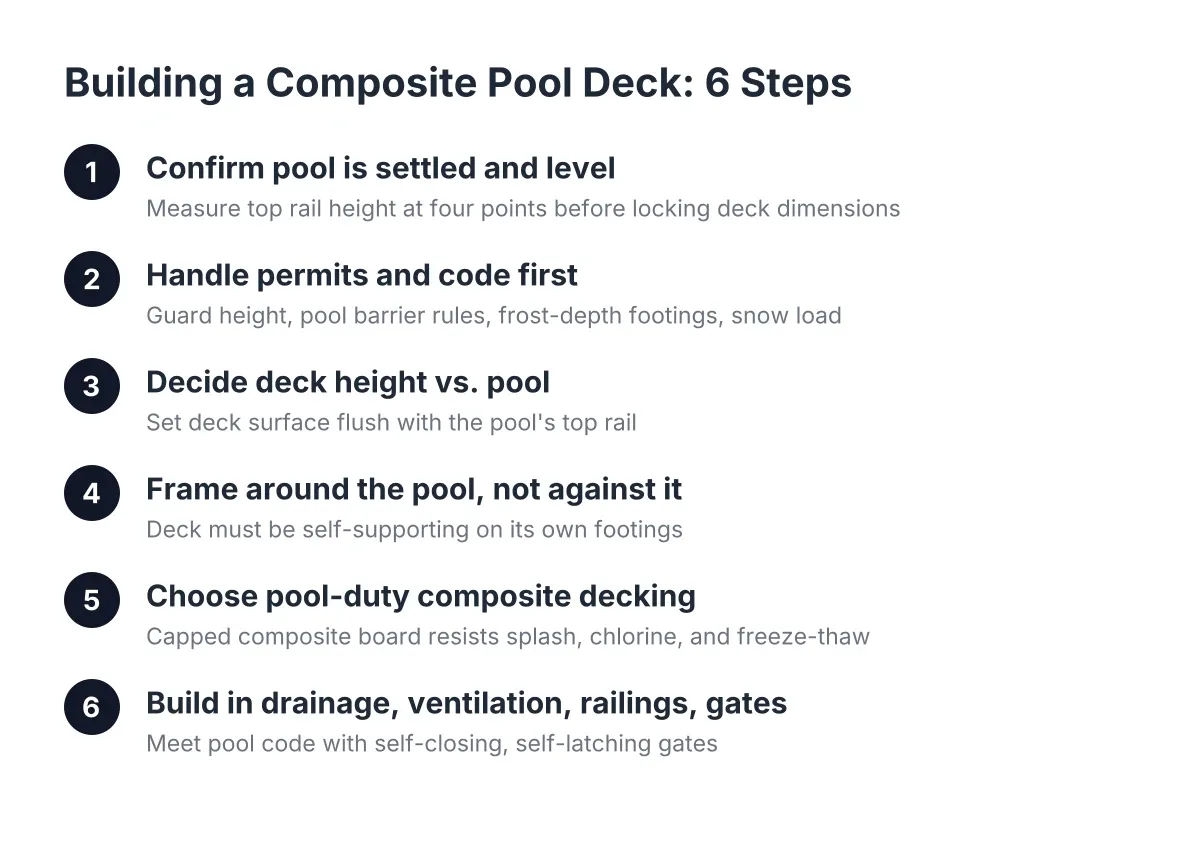
That's the working vocabulary this above ground pool decks glossary covers: the structure under your feet, the boards on top, the safety rules, and the paperwork. Now you can read a quote line by line and ask why the footings are the depth they are, what the joist spacing is, and where the water goes. If you're mapping out the whole project, the step-by-step plan for composite decking around an above ground pool is a good next read.
If you need deck building, WNY Deck Builders can help.
Prefer to talk it through? Call (716) 317-4901 — a quick call is usually the fastest way to get a straight answer for your situation.