Composite Decking Materials Terms Explained: A Plain-English Glossary
If you are pricing a composite deck in Buffalo or anywhere in Western New York, the quotes and product sheets come loaded with jargon. This composite decking materials glossary breaks down the terms you will actually see, in plain English, so you can read a quote line by line and know what you are paying for. Use it to compare bids, ask sharper questions, and spot gaps before you sign anything. Every definition stands on its own, so skip around freely.
- Composite decking: wood fibers plus plastic, made into boards
- Capped composite: a protective plastic shell on the board
- PVC decking: all-plastic boards, no wood content
- Capstock: the outer layer on a capped board
- Grooved vs. square-edge boards: edge styles for hidden or face fastening
- Fascia board: the trim that covers the deck's edges
- Hidden fasteners: clips that hold boards without visible screws
- Joist: the framing lumber under the deck boards
- Joist spacing: how far apart those framing boards sit
- Ledger board: the board that ties the deck to your house
- Footings: the concrete bases that hold the deck up
- Frost depth: how deep footings must go to beat the freeze
- Snow load: the weight of snow your deck must carry
- Freeze-thaw cycle: winter's expand-and-contract punishment
- Joist tape: a sticky barrier that protects framing from water
- Thermal expansion: boards growing and shrinking with temperature
- Linear foot vs. square foot pricing: two ways quotes measure cost
- Building permit: the town's written OK for your project
Boards and Materials in the Composite Decking Materials Glossary
These are the terms you will meet first when shopping composite decking materials, because they describe the boards themselves and what they are made of.
Composite Decking
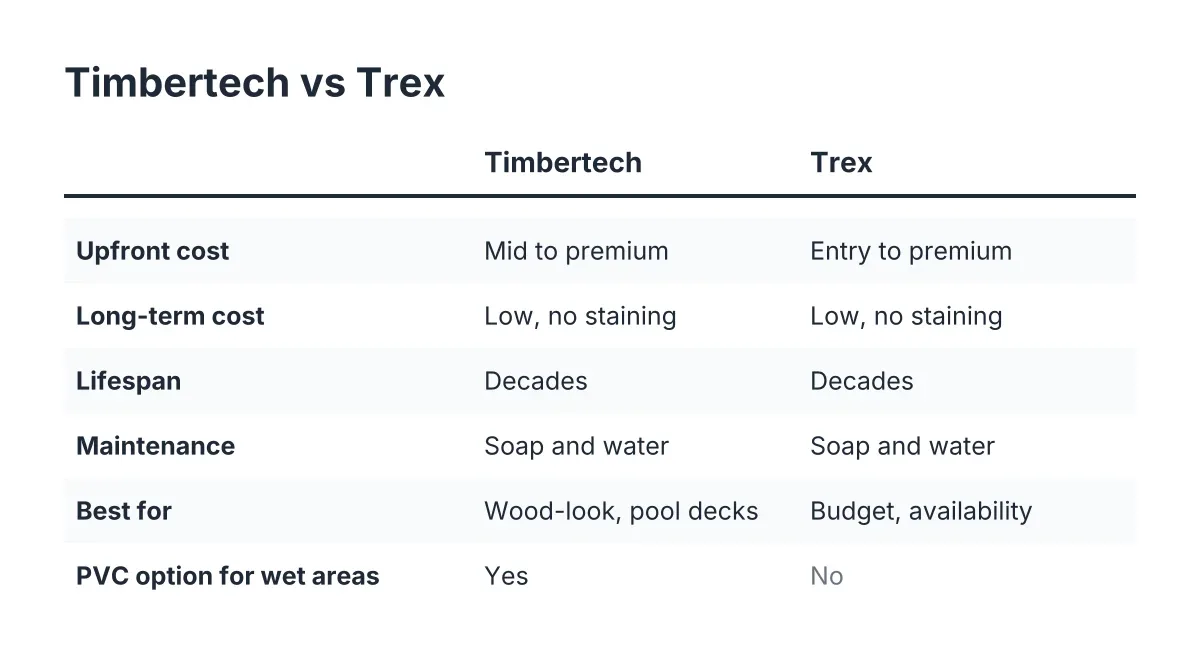
Composite decking is a deck board made from a blend of wood fibers and plastic, pressed into a solid or grooved plank. It resists rot, splinters, and insects better than pressure-treated lumber, and it never needs staining. For Buffalo homeowners, that means no spring sanding ritual after a lake-effect winter. It costs more up front than wood, so quotes that mention it should also show you the long-term trade. If you want help weighing brands, see our breakdown of Timbertech vs. Trex.
Capped Composite
Capped composite means a composite board wrapped in a bonded plastic shell on three or four sides. The cap blocks moisture, stains, and fading, which matters when a deck sits under snow for months. Uncapped composite is an older style that absorbs more water and fades faster. If a quote lists "capped" boards, you are getting the more durable, more current product.
PVC Decking
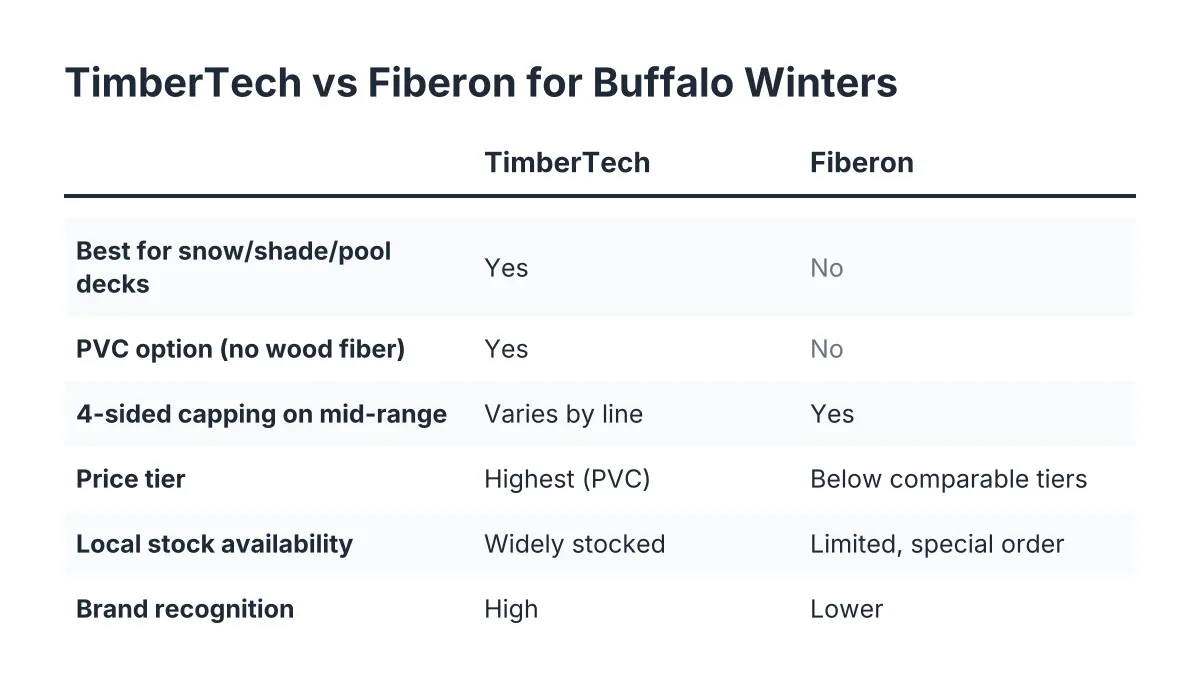
PVC decking is a deck board made entirely of plastic, with no wood fiber at all. Because there is no wood to soak up water, PVC handles freeze-thaw winters and pool splash better than almost any other board, which makes it a common pick for pool decks. It usually sits at the top of the price range for composite decking materials, so expect a provider who suggests it to explain why your site needs it. Our composite deck construction page covers where each board type fits. When comparing options, understanding the differences between these composite decking materials in the glossary helps you weigh durability, cost, and maintenance across all available choices.
Capstock
Capstock is the outer protective layer bonded to a capped composite or PVC board during manufacturing. It carries the color, the wood-grain texture, and most of the stain and fade resistance. When a product sheet brags about the cap, it is talking about capstock. Boards capped on all four sides shed water better than boards capped on three, which matters where snow piles against the deck edge.
Grooved vs. Square-Edge Boards
Grooved boards are deck boards with a channel cut into each side edge, while square-edge boards have flat, solid edges. The grooves accept hidden fastener clips, so no screws show on the deck surface. Square-edge boards get face-screwed and are used at stairs, borders, and deck edges where a groove would be visible. A quote that lists both is normal; the mix tells you where the builder plans picture-frame borders and stair treads.
Fascia Board
A fascia board is the wide trim board that covers the outer edge of the deck frame so you do not see raw joists. It is a finish detail, not a structural part, but it changes how the deck looks from the yard. Composite fascia matches the deck boards and never needs paint. If fascia is missing from a quote, ask whether the deck edges will be left exposed.
Framing and Site Work: Essential Composite Decking Materials Terms
The boards get the attention, but the frame under them does the work, especially under a Western New York snow load.
Hidden Fasteners
Hidden fasteners are clips or plugs that attach deck boards to the frame without visible screw heads on the surface. They give a cleaner look and remove the small water-collecting holes that face screws leave. They add material and labor cost, so a quote using them should cost more than one with face screws. Ask which system the builder uses and whether it allows a single board to be replaced later.
Joist
A joist is one of the horizontal framing boards that sit under the deck surface and carry its weight. Joists are almost always pressure-treated lumber even under composite boards, because composite is a surface material, not a structural one. The frame is where a deck fails first, so a builder who talks about joist condition during a repair estimate is looking in the right place. Our deck repair work often starts at the joists, not the boards.
Joist Spacing
Joist spacing is the distance between the centers of neighboring joists, commonly 16 inches on center for straight deck boards. Composite boards flex more than wood, so manufacturers set maximum spacing, and diagonal board patterns usually require tighter spacing. Tighter spacing means more lumber and labor, which shows up in the quote. If a bid is far cheaper than others, ask what spacing it assumes.
Ledger Board
A ledger board is the framing board bolted to your house that supports one side of an attached deck. A badly flashed ledger is the most common cause of serious deck failures and rotted house walls, because water sneaks behind it. Any builder quoting an attached deck should mention ledger flashing without being asked. Freestanding decks skip the ledger entirely and stand on their own footings.
Footings
Footings are the concrete bases set in the ground that carry the deck's posts and all its weight. In Western New York, footings must reach below the frost line so the ground's winter heave cannot lift and crack the deck. Footings are a real cost driver: more posts, deeper holes, and tough soil all add labor. A quote that does not mention footing depth for a new deck is leaving out a basic.
Frost Depth
Frost depth is how deep the ground freezes in winter, and footings must sit below it to stay stable. Around Buffalo, that means digging deep; local practice is 42-inch footings, and your town's code sets the requirement. Footings that stop short of frost depth heave upward when the ground freezes, which racks the frame and pops boards. Ask any bidder how deep their footings go and how they verify it before the inspection.
Snow Load
Snow load is the weight of accumulated snow a deck frame must be built to carry, set by local building code. Lake-effect snow makes this a live issue in Buffalo, not a formality, since a roof can shed feet of snow onto a deck below. Snow load drives joist size, beam size, and post spacing, so a frame designed for it uses more lumber. A builder who brings up snow load unprompted is designing for your weather, not a generic climate.
Freeze-Thaw Cycle
A freeze-thaw cycle is one round of water freezing, expanding, and thawing inside or around a material. Western New York winters deliver dozens of these cycles, and they crack concrete, heave footings, and wear out wood faster than steady cold would. Capped composite and PVC boards shrug off freeze-thaw better than wood because they absorb little water. It is the single best reason Buffalo homeowners choose composite over lumber.
Joist Tape
Joist tape is a self-sticking waterproof strip applied along the top edge of each joist before the deck boards go on. It stops water from sitting in screw holes and soaking into the frame, which is where decks rot first. It is a small line item that can add years to the frame. If it appears in a quote, the builder is thinking past the day the deck is finished.
Thermal Expansion
Thermal expansion means a deck board grows slightly in heat and shrinks in cold, mostly along its length. Composite and PVC boards move more than wood, so installers leave manufacturer-specified gaps at board ends and edges. In a climate that swings from summer heat to deep freeze, those gaps are not sloppiness; they are required. Boards installed too tight can buckle in July or pull fasteners in January.
Pricing and Paperwork
Linear Foot vs. Square Foot Pricing
Linear foot pricing charges by the running length of a feature, like railing or fascia, while square foot pricing charges by the deck's surface area. Most quotes mix both: boards and framing by the square foot, railing and trim by the linear foot. Knowing the difference lets you compare two bids item by item instead of staring at totals. For what actually moves the numbers, read our guide to composite decking materials cost.
Building Permit
A building permit is your town's written approval to build the deck, issued after it reviews the plans against local code. In Erie County, each town runs its own permit office, and most decks above a minimal height need one. A permitted deck gets inspected at the footing and framing stages, which protects you, and it matters again when you sell the house. A builder who handles the permit paperwork is saving you trips to town hall; one who suggests skipping it is handing you the risk.
Using These Terms
With this composite decking materials glossary in hand, you can read a deck quote line by line and know what each item does, from footings to fascia. When a builder mentions snow load, joist tape, or capped boards, you will know whether that signals careful work or just a longer invoice. Ask about the terms a quote leaves out; the gaps tell you as much as the line items.
If you need deck building, WNY Deck Builders can help.
Prefer to talk it through? Call (716) 317-4901 — a quick call is usually the fastest way to get a straight answer for your situation.